
The "Hormuz Hedge": Why Peace is More Volatile Than War
On Monday morning, the financial world witnessed a "handbrake turn" that defied weeks of bearish gravity. S&P 500 and Nasdaq 100 futures ignited, surging nearly 4% in pre-market trading, while Crude Oil prices—the heartbeat of the current conflict—cratered by more than 5%.
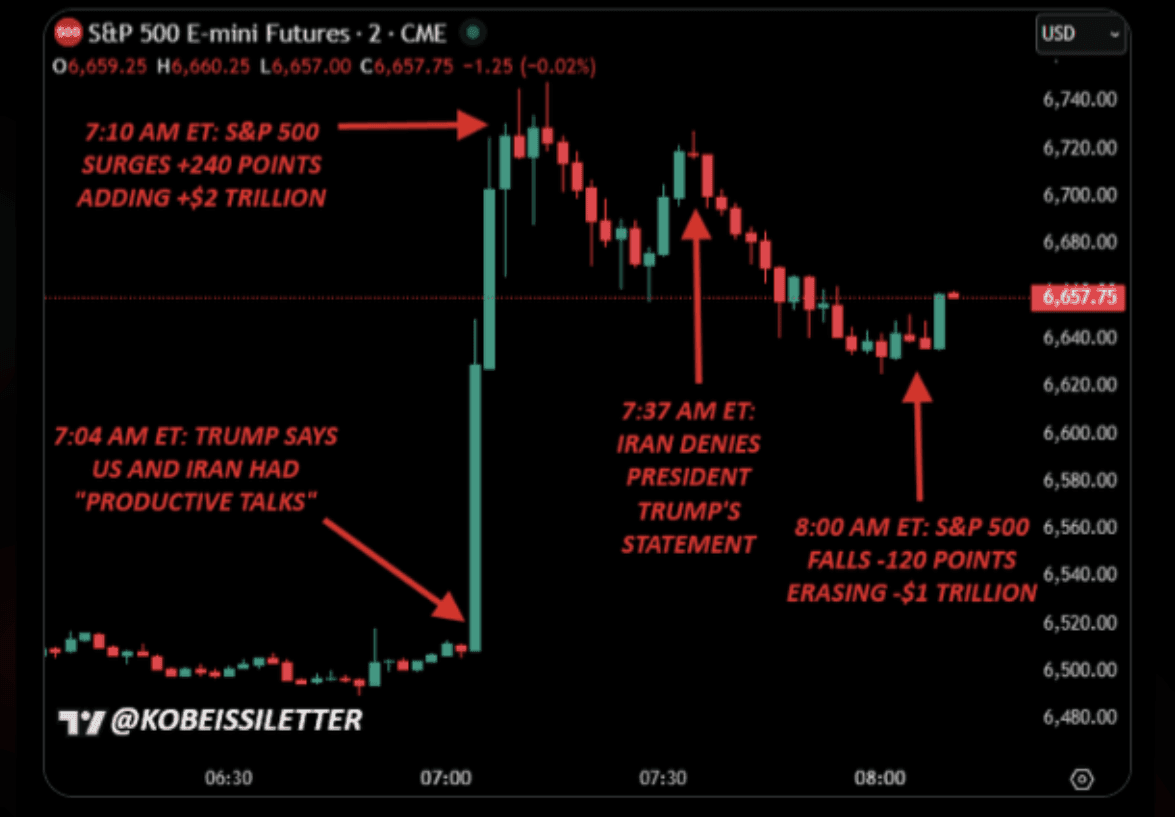
The catalyst was not a signed treaty, a ceasefire, or a diplomatic breakthrough. It was in fact headline volatility coming from one tweet from the President.
President Trump announced that the U.S. would postpone a massive planned strike on Iranian energy infrastructure for five days, citing "productive" talks and a mysterious "present" from Tehran—later revealed as the safe passage of a few select fuel tankers through the Strait of Hormuz. Suddenly, the "Trump Trade" was back in full force. The market, it seems, has decided to trust in a diplomatic masterstroke.
But as contrarians, this "peace rally" should be viewed with skepticism, at the very least.
While the market may be high on "Trump Hopium", it may very well be pricing in a Hollywood ending, with a "total resolution" delivered via a 15-point plan.
Behind the scenes, the Pentagon is moving the 82nd Airborne and thousands of Marines toward the Persian Gulf. While investors celebrate a five-day pause, the military is quietly positioning for what Axios calls the "Final Blow."
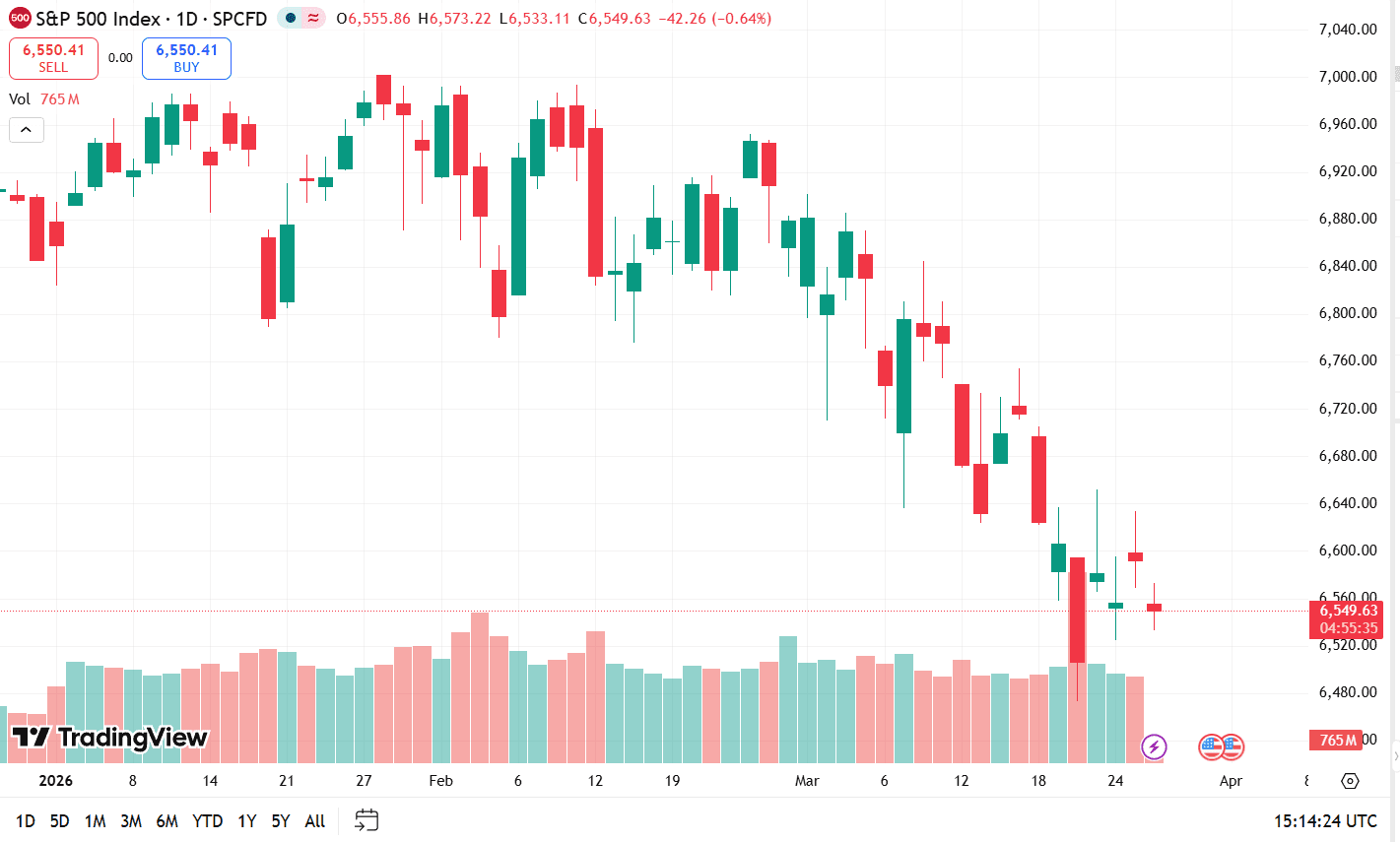
We are caught in a classic Negotiation Trap. The market is treating a tactical pause as a strategic pivot, but the technicals tell a darker story. With the SPX still struggling below its 200-day moving average and no "washout" event in sight, this surge isn't a bottom—it’s a head-fake.
Kharg Island and the "Orderly" Delusion
The current market pullback has been, in a word, polite.
Since the late January peak, the SPX has drifted down about 4.5% in what analysts call an "orderly" fashion. There’s no screaming in the pits, no circuit breakers, and no blood-curdling capitulation. But in the current dynamics, "orderly" may very well be a code word for "denial."
The 90% Kill-Switch
While the Nasdaq trades on RSI divergences and Moving Average crosses, the real "Moving Average" that matters is the naval traffic through the Strait of Hormuz.
President Trump’s "negotiation" isn't happening in a vacuum; it is backed by a multi-week bombing campaign that has already stripped away Iran’s defensive layers. The target of this leverage? Kharg Island.
Kharg Island handles roughly 90% of Iran’s oil exports. If negotiations over the Strait of Hormuz hit a wall, Kharg Island becomes a military target, and ultimately, a global economic inflection point.
If the U.S. moves from "bombing infrastructure" to "boots on the ground" (a partial invasion) to secure this 15-square-mile rock, the 4% relief rally we saw on Monday will evaporate instantaneously, and give way to a wider selloff.
Why the "Washout" is Missing
Technically speaking, the SPX is currently trapped below its 200-day moving average. In a healthy bull market, this is a "buy the dip" signal. In a 2026 war-time economy, it’s a ceiling.
We are missing the capitulation event—that moment of pure panic where the RSI hits 20 and everyone throws in the towel. Why hasn't it happened? Because the market is high on "Trump Hopium," betting that a "present" from Tehran will fix everything.
But look at the hardware:
The S&P 500 is pricing in a 25% probability that the bottom is already in.
The Pentagon is pricing in a "partial invasion."
These two things cannot both be true. If the "peace" is a stall tactic, the path of least resistance is a violent slide to the 6,000–6,200 support range—a 15% correction that finally provides the "washout" the technicals are screaming for.
The Delusion of Safety
Investors are currently hiding in the "MAG" stocks, thinking a 28% average decline makes them "safe." But if the "Hormuz Hedge" fails and oil infrastructure is leveled, a forward P/E of 15 for Nvidia won't matter. In a world of $150 oil, "orderly" pullbacks become "disorderly" crashes.
The "Hormuz Hedge" Strategy
If the Monday morning surge felt like a sigh of relief, the charts suggest it might actually be a gasp for air. While the "MAG" tech darlings are bouncing on hopes of a Trump-brokered peace, they remain incredibly vulnerable to the one thing a tweet can’t fix: a structural energy deficit.
If you want to play the contrarian hand, you don't chase the 4% tech spike. You build the Hormuz Hedge.
1. Rotate into the "Uncertainty" Discount
While the S&P 500 Energy sector jumped over 7% in late March, it remains the only sector fundamentally "long" on geopolitical chaos.
Look at the "beaten down" oil and gas majors that the market dumped on the first sign of a negotiation. If the Strait remains "virtually impassable"—as current reports suggest—the recent dip in Brent is a gift.
The logic here is that, even with "trust-building" talks in Pakistan, 20% of the world’s oil is currently stranded. A "partial invasion" of Kharg Island isn't a peace dividend; it's a supply-side nightmare that could send Brent toward the $120/bbl mark seen earlier this month.
2. The Nuclear "Baseload" Pivot
The war has proven that intermittent energy is a luxury that 2026 can’t afford. As data centers expand and the grid groans under the weight of AI, the market is finally realizing that Nuclear is the only non-negotiable.
Accumulate high-quality nuclear operators and uranium miners (like Cameco or diversified plays like GE Vernova).
While tech stocks like Microsoft and Oracle are being re-rated due to massive AI spending risks, the companies powering those AI ambitions are sitting on a supply-demand imbalance that will persist regardless of whether Iran signs a 15-point plan or not.
3. Hedging the "Orderly" Delusion
The most troubling signal in the current market isn't the 8-10% pullback; it’s that the selling has been too "orderly." We haven't seen the panic. We haven't seen the washout.
Maintain "dry powder" and aggressive hedging mechanisms. This means holding Inverse ETFs or Put Options on the Nasdaq 100 as long as it remains below the 200-day moving average.
The "death cross" on the Nasdaq is looming. If the "present" from Iran turns out to be a stall tactic, the market’s realization will be violent. You want to be the one providing liquidity when the SPX finally tests the 6,000 "capitulation" floor, not the one begging for it.
Ultimately, it is critical to not let a relief rally blind you to a blockade. In 2026, the best "hedge" is actually owning the energy the world can't live without while the rest of the market bets on a miracle.
A Practical Solution to Readily Implement
The market is currently trapped in a high-stakes game of "geopolitical chicken." While the headlines chase the latest tweet and the algorithms react to every rumor of a "present" from Tehran, the underlying reality remains: Volatility is the new baseline. Whether we see a 15% washout to the 6,000 level or a moonshot to our 7,800 year-end target, the days of "set it and forget it" indexing are dead.
In a world where Oracle can drop 60% in a heartbeat and the "death cross" is stalking the Nasdaq, you don't just need a hedge—you need a high-conviction engine that knows how to navigate the wreckage of a valuation reset.
Deploy the Solution: The T-Rowe Opportunities Fund Tracker
If you’re tired of babysitting RSI divergences and guessing the next move in the Strait of Hormuz, it’s time to automate your resilience. We are opening access to the T-Rowe Opportunities Fund Tracker, an automated strategy designed to strip the emotion out of this chaotic tape.
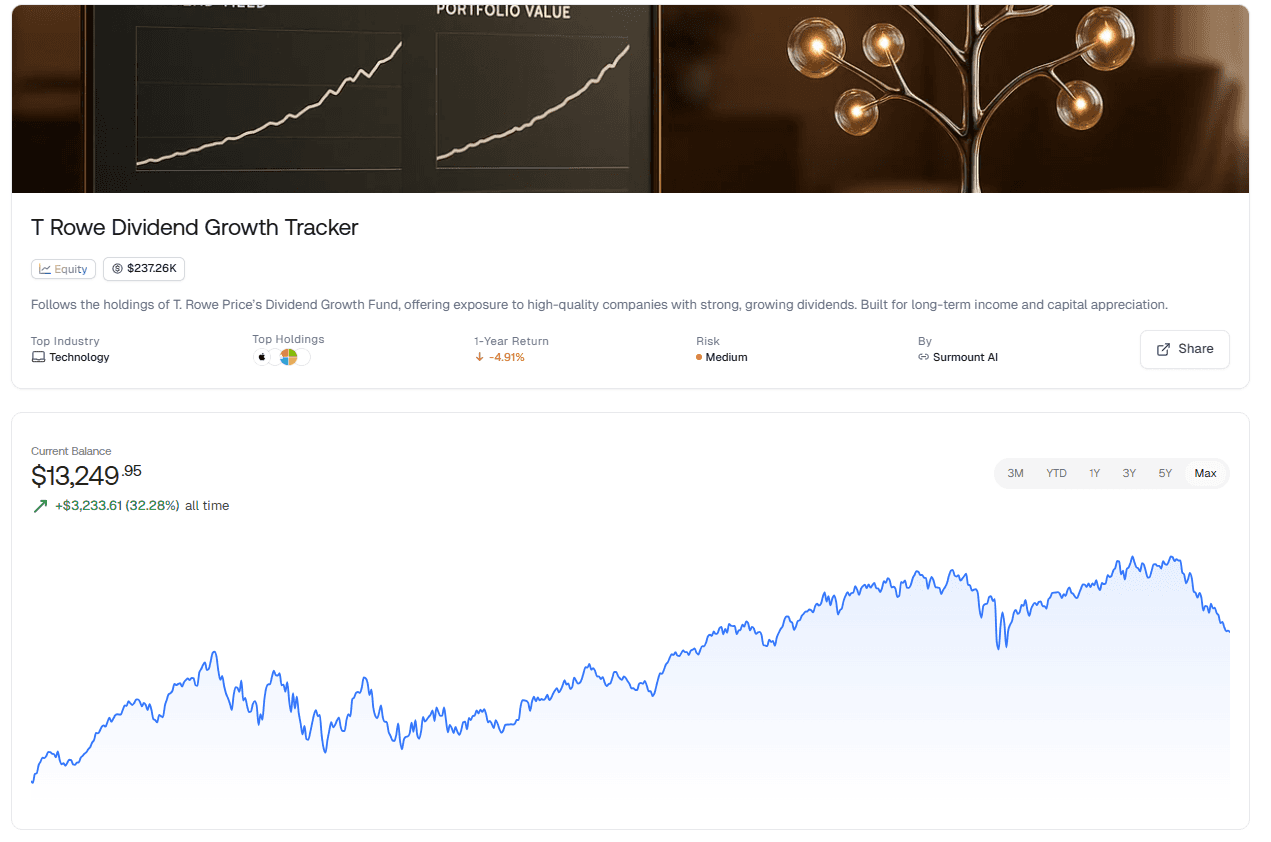
This isn't a passive index play that leaves you exposed to the next "Black Swan." This strategy mirrors the elite holdings of T. Rowe Price’s All-Cap Opportunities Fund, giving you instant, algorithmic access to:
High-Conviction Alpha: Diversified exposure to the exact stocks the pros are betting on across all market caps—from the "MAG" tech giants currently sitting at historic PEG lows to the "beaten-down" gems ready for a massive reversal.
Institutional-Grade Agility: While retail investors are frozen by "Trump Hopium," this tracker follows the moves of institutional managers who have the resources to price in the Fed’s next move before it happens.
A "Solution to Everything": Whether the S&P 500 bottoms at 6,500 or tests 6,000, the T-Rowe Opportunities Fund Tracker focuses on quality and recovery potential, ensuring your portfolio isn't just surviving the volatility—it’s harvesting it.
The window for the "Peace Bounce" is closing. Don't wait for a 12% correction to realize your portfolio was unhedged. Take control of the uncertainty and deploy a strategy backed by one of the most respected names in asset management.
[Click Here to Deploy the T-Rowe Opportunities Fund Tracker to Your Portfolio Now]
NEVER MISS A THING!
Subscribe and get freshly baked articles. Join the community!
Join the newsletter to receive the latest updates in your inbox.