

The Dividend Investing Risks Nobody Warns You About: Why "Set and Forget" Is a Slow-Motion Wealth Trap
There's a comforting story told to retail investors at every stage of their journey. Buy solid dividend-paying stocks, reinvest the income, and let time do the work. It sounds almost too simple. That's because it often is.
The uncomfortable truth is that passive income investing, as most people practice it, contains structural flaws that quietly erode wealth over time. Not dramatically. Not all at once. Slowly — the way a slow leak drains a tank while you're not watching.
This isn't an argument against dividends. It's an argument against complacency.
The High Yield Dividend Trap: When Income Looks Like Opportunity But Isn't
Why Chasing Yield Is One of the Most Dangerous Investor Behaviors
When markets get volatile, income investors do something predictable: they reach for yield. A stock paying 9% feels safer than one paying 3%, especially when savings accounts are barely keeping pace with inflation. That instinct is understandable. It is also one of the most reliable ways retail investors destroy capital.
High yield is not inherently bad. But yield divorced from context is dangerous. When you chase yield without understanding what's generating it, you are making a bet without knowing the odds.
High Dividend Yield Warning Signs Most Retail Investors Miss
A yield rises in two ways. Either the dividend increases, or the share price falls. The second scenario is where most retail investors get hurt, and it happens quietly.
A stock paying $1.00 annually at $20 per share yields 5%. If that share price drops to $10 because of deteriorating fundamentals — rising debt, weakening cash flow, poor management decisions — that same $1.00 dividend now yields 10%. On a screen, it looks like a better deal. In reality, the market is waving a red flag.
Watch for these warning signs: payout ratios above 90%, dividend coverage ratios that are thinning year over year, and management teams that talk about dividend sustainability without addressing the balance sheet behind it.
The Sucker Yield: How an Unsustainable Dividend Payout Lures You In
The sucker yield is the market's cruellest trick. It inflates the yield precisely when a company is most vulnerable — drawing in income-hungry investors right before a dividend cut, a balance sheet collapse, or both. By the time the cut is announced, the early buyers are already underwater on both income and capital.
The pattern repeats across sectors and cycles. The yield looks irresistible. The fundamentals whisper caution. Most retail investors hear the yield and ignore the whisper.
Inflation, Flat Dividends, and the Quiet Destruction of Purchasing Power
A dividend that stays flat is not standing still. In real terms, it is actually shrinking. If inflation runs at 3% annually and your dividend stays fixed for five years, your purchasing power has eroded by roughly 14%. You receive the same nominal income. You can buy meaningfully less with it.
In fact, during periods of high inflation some companies may decide to suspend payouts entirely:
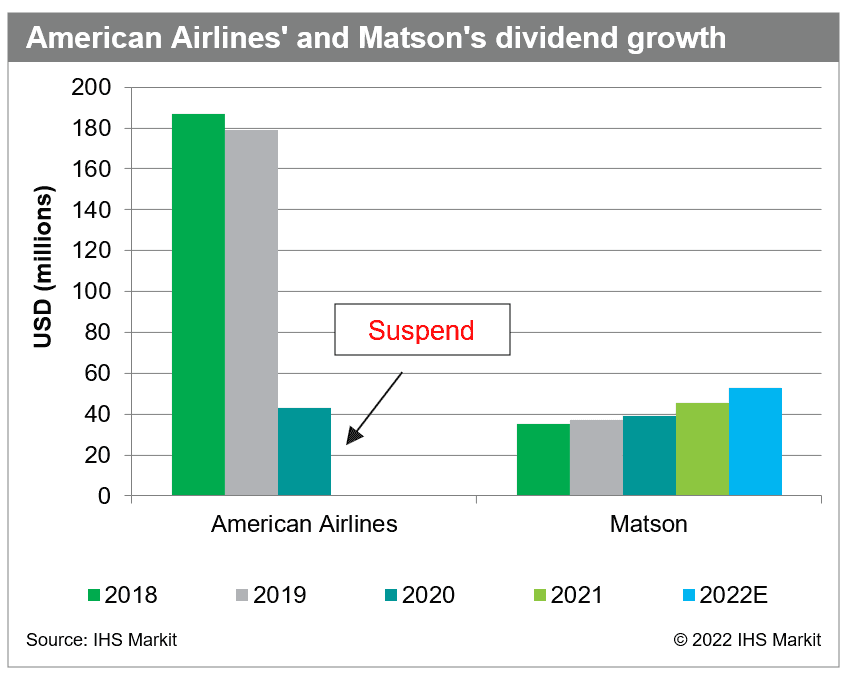
This is one of the most underappreciated dividend investing risks in the retail space. Investors fixate on whether the dividend is maintained, whereas the more important question is whether it is growing fast enough to outpace inflation.
Inflation Eroding Dividend Income: The Real Return Nobody Talks About
Real return (nominal yield minus inflation) is the number that actually matters for long-term wealth building. A 7% yield in a 4% inflation environment delivers a real return of roughly 3%, before tax. That is before accounting for any capital depreciation in the underlying stock.
Yet most retail investors never frame it this way. They see the income number, feel reassured, and move on. Meanwhile, inflation eroding dividend income is doing its quiet work in the background, compounding in the wrong direction.
Dividend Portfolio Underperforming? Flat Yields and Real Losses May Be Why
If your dividend portfolio is underperforming broader indices over a five or ten year horizon, flat yield is frequently a significant contributor. High-yield, low-growth dividend stocks tend to lag total return benchmarks over long periods precisely because capital appreciation is sacrificed at the altar of current income. You get paid today. You pay for it later.
Passive Income Investing Myths and the Retail Investor Mistakes That Follow
The set and forget portfolio strategy is sold as simplicity. In practice it is often negligence dressed up as discipline. Markets change. Interest rate environments shift. Business models deteriorate. A company that was a reliable dividend payer in 2015 may be a dividend cut risk by 2025 for reasons that were entirely visible to anyone paying attention.
Passive income investing requires active judgment. The two are not contradictory. Buying and holding is a valid strategy. Buying and ignoring is not.
Income Investing vs Total Return: Which One Actually Builds Wealth?
This is the question most dividend-focused investors never seriously ask. The evidence consistently favors total return investing over pure income strategies across most long-term time horizons. Dividend growth stocks — companies that grow their payout steadily over time — tend to outperform both high-yield income stocks and flat dividend payers because they signal underlying business quality and compounding power.
The income investing vs total return debate is not about which produces more cash in year one. It is about which builds more real wealth in year twenty.
Dividend Cut Risk, Payout Ratios, and What Your Broker Isn't Telling You
Dividend cut risk is the event most income investors claim to be watching for and few actually monitor rigorously. The signals are almost always there in advance: a payout ratio creeping above 100%, free cash flow declining relative to dividend obligations, management language shifting from confident to cautious on earnings calls.
Your broker is not incentivized to flag these early. The fee structure of most retail investment platforms rewards holding, not scrutinizing. That responsibility falls entirely on you.
The investors who survive and compound over decades are not the ones who found the highest yields. They are the ones who asked hard questions before the market asked them first.
Automated Strategy: If You're Going to Chase Income, Do It Intelligently
Everything written above is an argument against complacency — not against income investing entirely. There is a meaningful difference between blindly holding a high-yield stock and hoping the dividend survives, and systematically positioning yourself for income using a rules-based, actively managed approach.
That distinction is exactly what the AlphaFactory Income strategy on Surmount is built around.
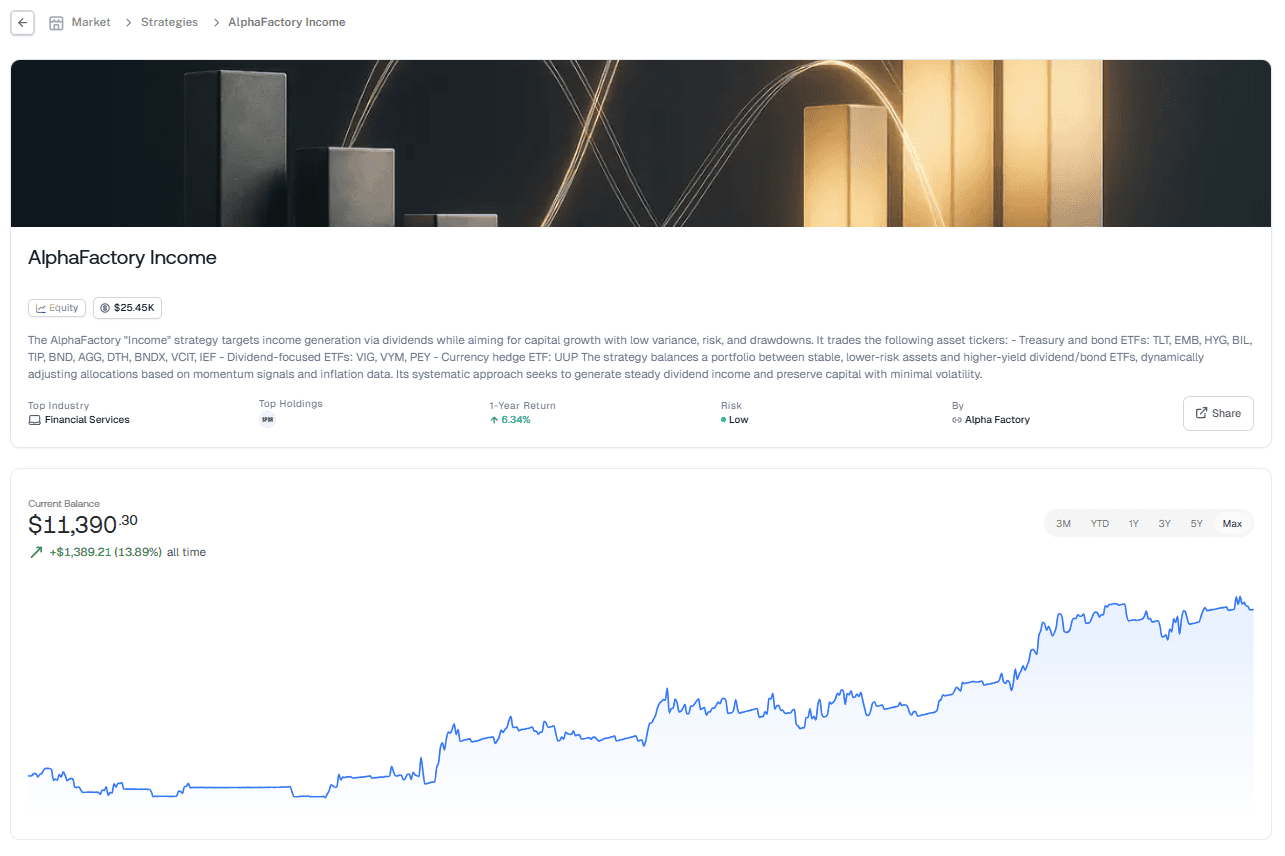
Rather than concentrating risk in a single high-yielding stock with a fragile payout ratio and a deteriorating balance sheet, AlphaFactory Income spreads exposure across a carefully selected basket of treasury and bond ETFs, dividend-focused ETFs, and a currency hedge — dynamically rebalanced based on real-time momentum signals and inflation data.
This matters because inflation eroding dividend income is one of the central risks this article warns about. AlphaFactory Income doesn't ignore that risk. It actively responds to it, adjusting allocations as macro conditions shift rather than sitting still while purchasing power quietly erodes.
The result is a strategy designed to do what most retail income portfolios fail to do: generate steady dividend income while actively protecting capital, managing drawdowns, and maintaining low volatility across different market environments.
No sucker yields. No set and forget complacency. No flat dividend quietly losing ground to inflation year after year.
Just a systematic, intelligent income strategy that does the active thinking most retail investors don't have the tools — or the time — to do themselves.
If income is your goal, this is a smarter starting point.
Explore the AlphaFactory Income strategy on Surmount and let a rules-based system do the heavy lifting.
NEVER MISS A THING!
Subscribe and get freshly baked articles. Join the community!
Join the newsletter to receive the latest updates in your inbox.