

How Wartime Spending May Actually Neutralize the Energy Tax
Over the weekend, as the world was on edge waiting for a sign of de-escalation, the rhetoric from the Oval Office took a sharp turn toward the tactical. President Trump’s "48-hour" ultimatum to Iran sent shockwaves through the futures market, pushing Brent crude toward $110 and forcing the 10-year Treasury yield to stare down 4.4%. To the casual observer, this looks like the classic prologue to a recession: a geopolitical shock, a spike in energy costs, and a tightening of the screws on the American consumer.
But the consensus may very well be looking at an outdated map.
We are witnessing what I like to call The Great Neutralization. While the "Energy Tax" is undeniably real (draining liquidity from the pockets of lower-income households) it is being met head-on by a massive, front-loaded fiscal force: the Stealth Stimulus.
For the first time in a generation, the US economy is structurally braced for this impact. Between our status as a net energy exporter and the raw math of wartime expenditures, the "Trump Risk Premium" currently being priced into the S&P 500 is a warning sign, but also, more critically, a mispricing of a "Stimulus Discount."
The market is fixated on the cost of the conflict, yet it is completely blind to the "G" in the GDP equation. In a modern economy, government spending at this scale doesn't just fund a war; it acts as a liquidity bridge that neutralizes the drag of $100 oil. If history and the current fiscal multipliers are any guide, the S&P 500 may actually get fueled by a wartime engine that the bears haven't accounted for.
Why Defense Spending is a GDP Floor
To understand why the "Trump Risk Premium" is likely overdone, we have to look at how GDP is actually calculated:
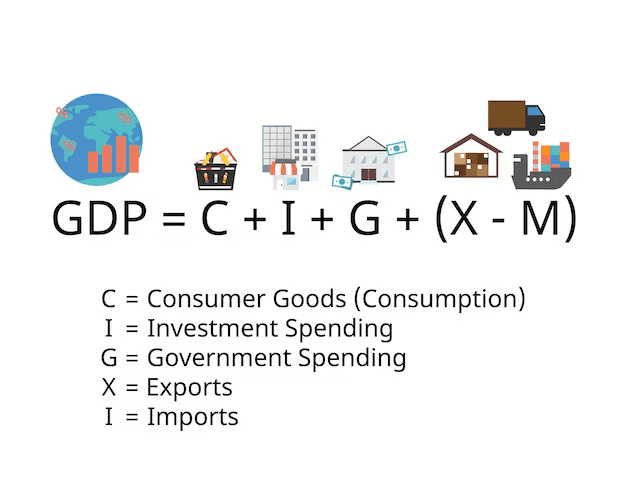
While most investors focus on the potential contraction of C (Consumer Spending) due to $100+ oil, they are mathematically blind to the massive surge in G (Government Spending).
The Historical "Liquidity Bridge"
According to data analyzed by Fundstrat’s Tom Lee, the U.S. has averaged $32 billion per month in inflation-adjusted spending across the last seven major conflicts.
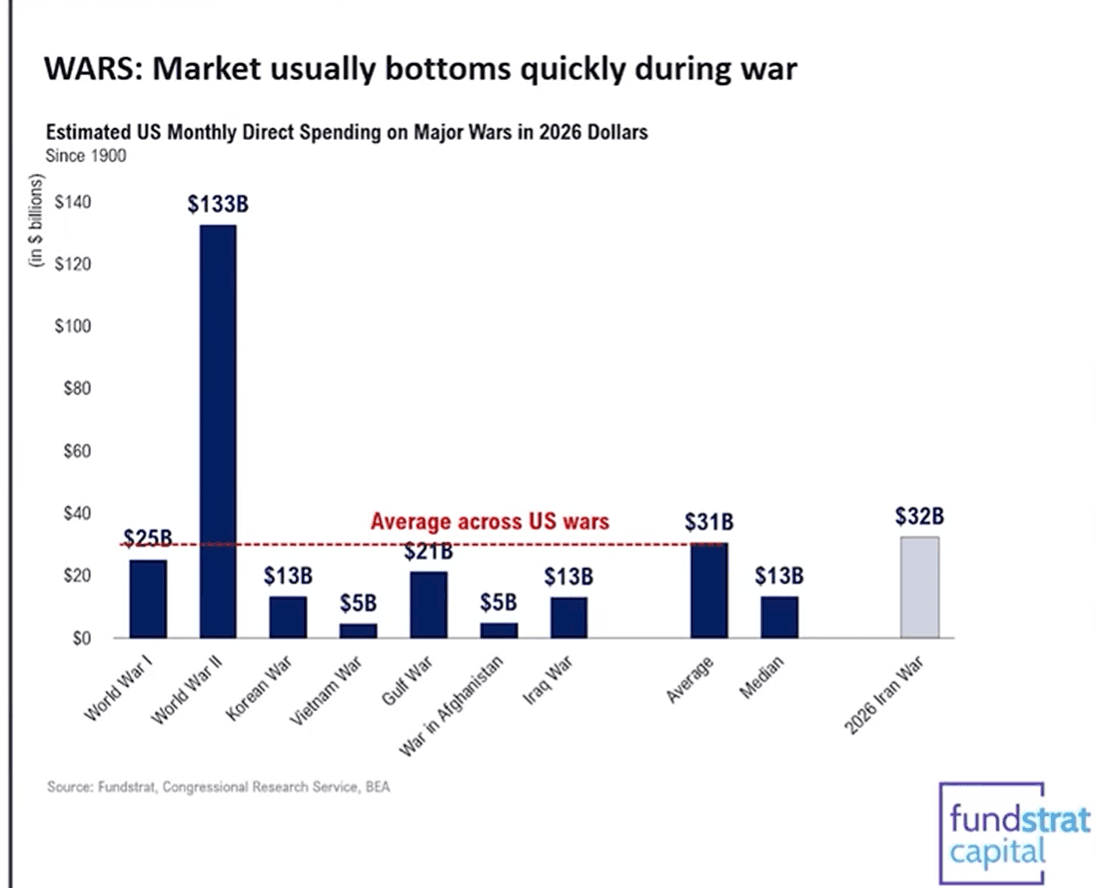
This isn't just "spent" money; it is a direct injection into the industrial base. In the current context of the Iran conflict, this $32 billion acts as a fiscal floor.
When the Pentagon ramps up procurement, that capital flows immediately into:
Aerospace and Defense: Direct revenue for the "primes" and their massive Tier-2 and Tier-3 supply chains.
Energy and Logistics: Massive government contracts for fuel and transport, which partially recycles the high oil prices back into the domestic economy.
Technological Spinoffs: Accelerated R&D in AI-driven defense systems, which sustains the "Information Technology" earnings revisions we are currently seeing.
Calculating the Tug-of-War
The consensus view is that $100 oil is a "tax" that drains the economy. However, the energy intensity of the U.S. economy has dropped so significantly that a sustained $100+ Brent price only drags real GDP growth by approximately 0.2% to 0.3%.
Now, let’s look at the "Stealth Stimulus" math:
The Energy Drag: At $110/barrel, the "tax" on the U.S. consumer is significant but manageable, given that energy is only 2% of total spending.
The Defense Offset: $32 billion a month equates to roughly $384 billion annually.
The Breakeven: For oil prices to actually "win" this tug-of-war and push the U.S. into a net-negative GDP territory, crude would need to cross the $125 per barrel threshold—roughly 15% higher than current levels.
The Net-Exporter Paradox
Unlike the oil shocks of 1973 or 2008, the U.S. in 2026 is a net energy exporter. This is the "secret sauce" of the current cycle. While a consumer in Ohio feels the pinch at the pump, a producer in the Permian Basin is seeing record inflows. This income doesn't vanish; it manifests as corporate profits, dividends, and reinvestment, further cushioning the GDP against a traditional "oil recession."
Ultimately, the market is pricing the Iran escalation as a pure liability. In reality, the $32 billion monthly defense floor ensures that as long as oil stays below $125, the "G" in the GDP equation will likely outpace any shrinkage in "C." We aren't looking at a recession; we are looking at a re-allocation of capital from the consumer's wallet to the industrial complex.
Midterms and a "Controlled Escalation"
The most critical variable in any geopolitical model is the incentive structure of the person holding the pen. With the midterm elections just eight months away, President Trump is operating within a narrow "Goldilocks" zone. He needs to project maximum strength to satisfy his base and secure a deal, but he cannot afford the structural damage of a $150 oil spike that would alienate the suburban voter. This creates the perfect environment for what I call "Controlled Escalation."
The Election Year "Circuit Breaker"
Historically, incumbent administrations do everything in their power to prevent a recession in an election year. The 45-day ceasefire currently being negotiated isn't just a humanitarian gesture; it’s an economic circuit breaker.
By pushing the "all hell rains down" narrative, the administration creates a vacuum of fear that allows them to "save" the market later with a surprise resolution. As a contrarian, you should recognize that the "Trump Risk Premium" currently weighing on the S&P 500 is likely a temporary political artifact, not a permanent structural shift.
Funding the "Energy Shield"
The irony of the US’s position as a net energy exporter is that the government is essentially "long" oil while the lower-income voter is "short." This creates a unique fiscal opportunity:
Windfall Revenues: Rising oil prices increase corporate tax receipts from the Permian Basin and energy giants.
Strategic Redistribution: Expect the administration to use the "wartime footing" as a justification for targeted fiscal stimulus or energy rebates. This would effectively use the profits of the energy boom to shield the vulnerable 17% of lower-income spending, neutralizing the primary threat to domestic stability.
The Investor’s Takeaway: Buying the Resolution
If we follow the "Conflict Playbook," we are currently in the Maximum Pressure phase. This is characterized by peaking yields and surging oil. However, the political clock makes Scenario 3 (total war and $150 oil) a self-defeating move for the President.
The more likely outcome is a pivot to de-escalation once the "Stealth Stimulus" of defense spending has sufficiently padded the GDP numbers for Q2 and Q3. For those looking past the headlines, the current P/E compression to 19.8x isn't a warning sign of a crash—it’s the market offering a discount on a recovery that is politically mandated to happen before November.
Maximizing the "Defense Dividend" Through Automated Trades
While the macro math suggests the US economy is more resilient than the consensus believes, savvy investors know that a "GDP floor" isn't enough—you want to be positioned where the capital is actually flowing.
If the Stealth Stimulus theory holds, the primary beneficiaries won't just be the broad market; they will be the specific firms providing the "G" in the GDP equation. As global security requirements tighten and the US maintains its 48-hour readiness posture, the aerospace and defense sector is no longer just a hedge—it is an alpha engine.
To help you capitalize on this structural shift, we’re highlighting Surmount’s specialized automated tool:
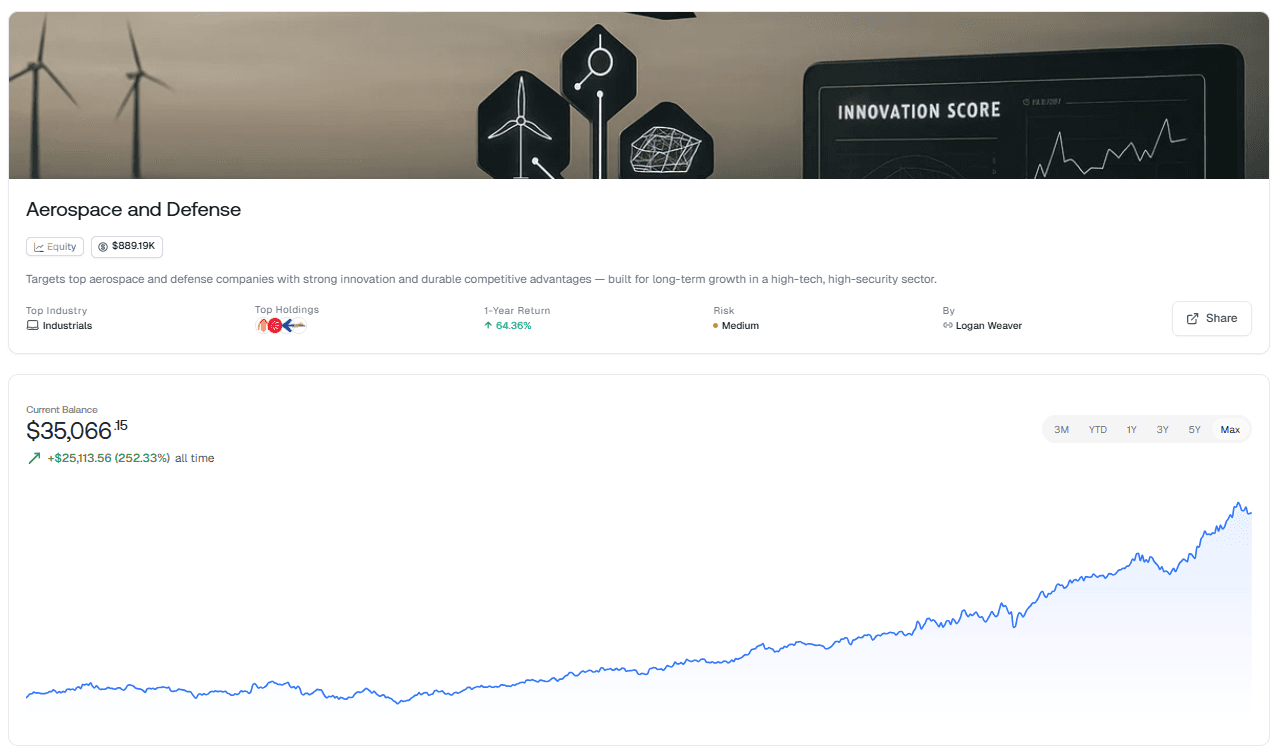
The Aerospace and Defense Strategy
This isn't a passive index play. This automated strategy is precision-engineered to navigate the very "Wartime Stimulus" we’ve discussed. It doesn't just buy the biggest names; it targets the elite tier of the industry:
The Innovation Filter: The strategy identifies companies with the highest Innovation Scores, ensuring you are backed by the firms developing the next generation of high-tech defense systems.
The Competitive Moat: It specifically isolates firms with durable competitive advantages, protecting your capital in a high-security sector characterized by massive barriers to entry.
Automated Execution: Built for long-term growth, the strategy manages the entry and exit points for you, removing the emotional volatility of the "Trump Risk Premium" headlines.
If you believe that wartime spending is the new economic backstop, don't just watch the GDP numbers—own the companies driving them.
NEVER MISS A THING!
Subscribe and get freshly baked articles. Join the community!
Join the newsletter to receive the latest updates in your inbox.