
Welcome To The Age of Headline Volatility
For decades, the bedrock of professional investing has been the Efficient Market Hypothesis (EMH)—the comforting, albeit increasingly delusional, belief that asset prices serve as a rational aggregation of all available information. We were taught that if a company’s fundamentals are sound, the market will eventually recognize its value.
But look at your screens today, and you will find that the "efficient" market is a relic of a slower, more analog era.
We have entered the Age of Headline Volatility. In this environment, the correlation between underlying economic reality and price action has not just decoupled—it has been severed by a high-frequency feedback loop.
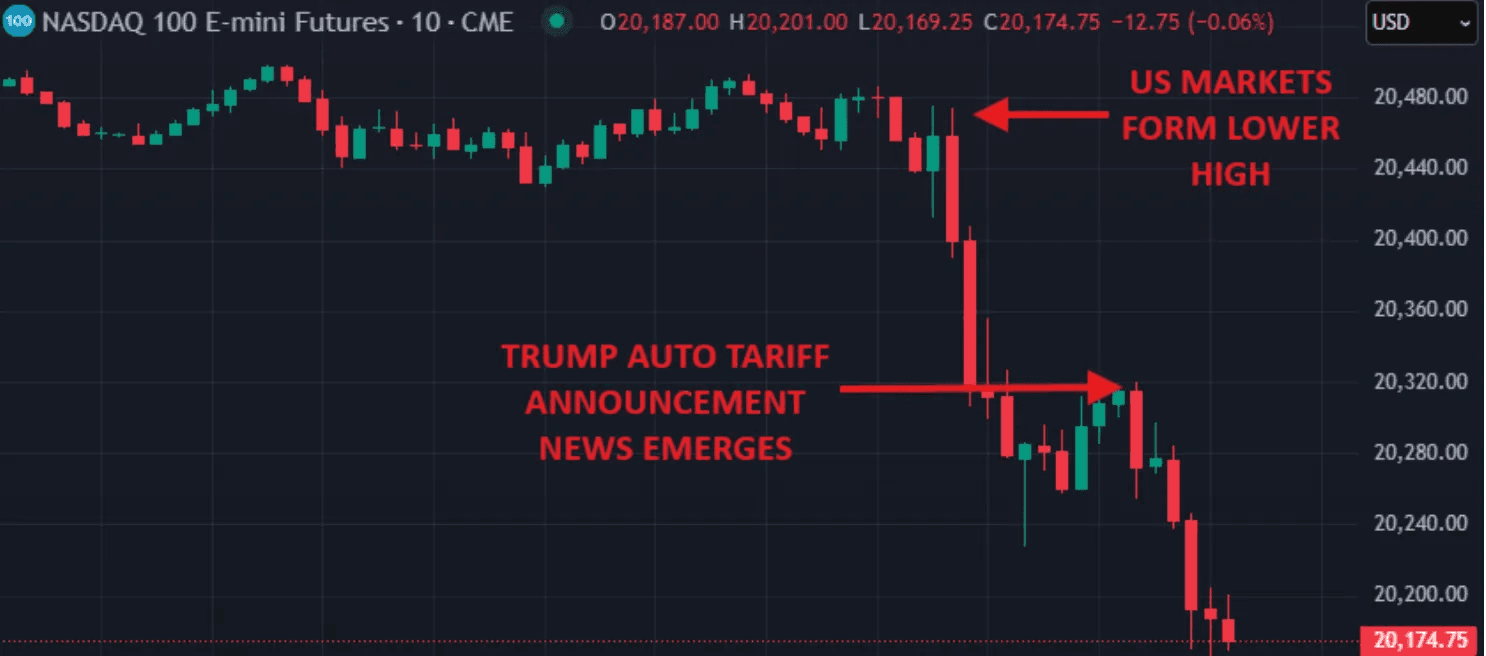
Headlines have consistently been flashing “signals” relating to tensions in the Middle East, tariff uncertainties, the potential deflation of the AI bubble, and the unpredictable, rhythmic pulse of central bank signaling. Each of these events triggers a cascade of automated liquidation or speculative buying before the ink is even dry on the original report.
The reality is that we are no longer trading the business; we are trading the reaction to the news cycle.
In such an environment, the "efficient" market has been replaced by the "reflexive" market. Algorithms are not reading the financial statements of a corporation; they are sentiment-scanning Twitter, monitoring the tone of a policymaker’s press conference, and scanning for keywords in real-time news feeds. When a headline hits, the price moves first—often violently—and the fundamental analysis arrives days later, serving only to justify the move that has already occurred.
For more conventional investors who prefer a more orthodox approach to market analysis, this creates a state of perpetual paralysis. They wait for the "market to normalize" or for the data to confirm their thesis, but normalization never arrives because the environment is structurally designed to prioritize momentum over mean reversion.
If you are waiting for the market to return to the orderly, rational pricing of the past, you are not waiting for a recovery; you are waiting for an extinction event. The edge in this new regime does not belong to the analyst who can parse a balance sheet the fastest. It belongs to the contrarian who understands that the noise is now the market.
Policy, Platforms, and Process
Back in the day, the gap between a policy announcement and its impact on the real economy would usually serve as a buffer for price discovery. With the market dynamics today, things are much different, and that gap has in fact been compressed to milliseconds, according to a study by Christenson et al (2025). As such, it would seem that we are now trapped in a recursive loop where policy is the catalyst, social media is the amplifier, and algorithmic execution is the accelerant:
The Policy-Signal Trap
Central banks and governments have transitioned from "transparency" to "psychological management." That means investors are no longer analyzing capital allocation; they are deciphering the linguistic nuances of officials to front-run the next liquidity injection.
This has created a market that is hyper-sensitive to rhetoric rather than results, which leads to a high tendency to overreactions. So because policy signals are becoming the primary asset class, traditional valuation models are far more likely to break down because the "discount rate" is now tethered to the mood of a subcommittee rather than the cost of capital.
Social Media: The Narrative Multiplier
Social media has democratized the speed of information while simultaneously debasing the quality of analysis. In the Age of Headline Volatility, a tweet or a viral thread can trigger a market movement that defies logic for hours, or even days, before fundamentals reassert themselves.
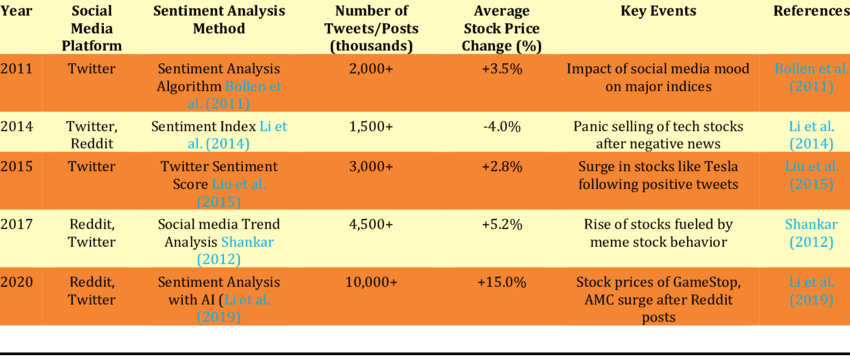
This isn't just "noise", as some might suggest. Institutional desks are now forced to monitor social velocity as closely as they monitor interest rates, because in a world of high-speed retail participation, the narrative often dictates the price long before the balance sheet confirms the reality.
Algorithmic Execution: The Accelerant
The final leg of this triad is the structural response of the market itself. The modern market is dominated by quantitative models, HFTs, and market sentiment indicators. These systems are programmed to react to the very policy signals and social media shifts mentioned above.
When a policy headline drops or a social trend gains traction, algorithmic models trigger massive, instantaneous buy/sell orders based on volatility thresholds or sentiment scores. This creates a reflexive, self-reinforcing cycle: the price moves because the algorithm saw the headline, and the headline becomes more significant because the price moved. In short, we are now part of a system that feeds on its own mechanical momentum.
Exploiting the Headline Volatility Distortions
Given the picture we’ve just laid out, it seems evident that the market continues to become hyper-adaptive and feedback-driven. In this environment, the traditional "buy and hold" investor is often the one left holding the bag during a liquidity vacuum. To find alpha, the contrarian must stop viewing volatility as an obstacle and start viewing it as a mispricing engine.
To do this, we must weaponize the noise:
Trading the "Information Half-Life"
In the present environment of headline volatility, the initial reaction to news is almost always an over-correction driven by algorithmic front-running. Whether it’s a Fed leak or a viral rumor on X (formerly Twitter), the first 15 minutes of price action are pretty much dominated by machines and bots.
The contrarian’s advantage lies in the mean reversion of logic. While the "fast money" reacts to the headline, the sophisticated investor trades the gap between the narrative and the reality. By the time the algorithmic dust settles, the asset is often disconnected from its intrinsic value, providing a high-probability entry point for those with the stomach to fade the initial spike.
Sentiment as a Counter-Indicator
When social media sentiment and policy signals align, they create a "crowded trade" that is structurally fragile. In a market dominated by momentum-chasing AI, positioning becomes extreme very quickly.
High-value investors should monitor Sentiment Dispersion. When the retail herd and the algorithmic trend-followers are 100% in agreement, the "headline" has been fully priced in, and the risk-reward profile flips.
At this peak of certainty, the contrarian looks for the exit—or the reversal.
True value isn't found in being right about the news; it's found in being right about how wrong the crowd's reaction is.
Automating the Momentum Wave
The final, and perhaps most critical, edge for the modern contrarian is de-emotionalizing the entry. In an era of headline-driven spikes and social media "pump and dumps," the human brain is poorly equipped to stay objective. The solution isn’t to ignore the volatility, but to systematize your response to it using rules-based execution.
Take, for example, a high-beta asset like Tesla (TSLA)—the ultimate lightning rod for headline noise. Trying to manually trade every Elon Musk tweet or regulatory rumor is a recipe for exhaustion and "whipsaw" losses. Instead, sophisticated investors are turning to Exponential Moving Average (EMA) crossovers to filter the signal from the noise.
This is where Surmount’s Tesla Short and Long EMA strategy enters the picture.

By utilizing a TSLA Short & Long EMA strategy, you replace reactive guessing with systematic precision:
The Bullish Trigger: When the short-term (10-day) EMA crosses above the long-term (50-day) EMA, the strategy captures the genuine momentum shift, signaling a move from "noise" to a sustained trend.
The Risk Shield: The moment the 10-day EMA dips below the 50-day, the strategy triggers a sell. This ensures you aren't left "holding the bag" when a headline-driven rally loses its fundamental legs.
With this you need not worry about predicting the next headline, as you get access to a machine-ready process to ride the trend and exit before the downturn. If you’re ready to stop reacting and start executing, you can deploy this exact logic today.
[Click here to deploy the TSLA EMA Strategy to your own portfolio.]
NEVER MISS A THING!
Subscribe and get freshly baked articles. Join the community!
Join the newsletter to receive the latest updates in your inbox.