

The Case for Betting on Oil Normalization
Three days ago, the world woke up to reports of joint US-Israeli strikes on Iran’s Kharg Island, which is the country’s main export terminal that handles 90% of its oil outflows. Following the information being confirmed by President Trump, the markets responded swiftly sending Brent oil prices above $103 per barrel mark.
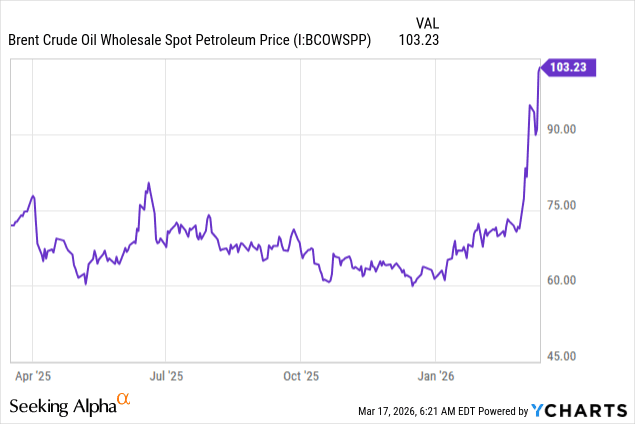
Now of course, to the casual investor looking at this chart, this looks like the start of a multi-year super-cycle—a parabolic breakout driven by the existential threat of a closed Strait of Hormuz and a regional conflagration. Analysts all across the board are implying that we may be entering a "permanent war premium" era, with some even calling a price $150 Brent by the summer, while headline volatility seems to be firing up.
The logic is quite easy to follow on to, with supply being under fire, the Middle East a tinderbox, and the world’s most powerful military locked in a high-stakes standoff.
As contrarians, however, when we see consensus this unanimous, we begin to wonder if we are looking at the peak of a "geopolitically-induced bubble" rather than the floor of a new era. To the contrarian, the most dangerous phrase in investing is "this time it’s different." The current narrative assumes that a conflict with Iran is a one-way street to $150 oil. But history, and a closer look at the internal pressures mounting on the White House, tells a different story.
The "Election-Year Ceiling" and the SPR Bazooka
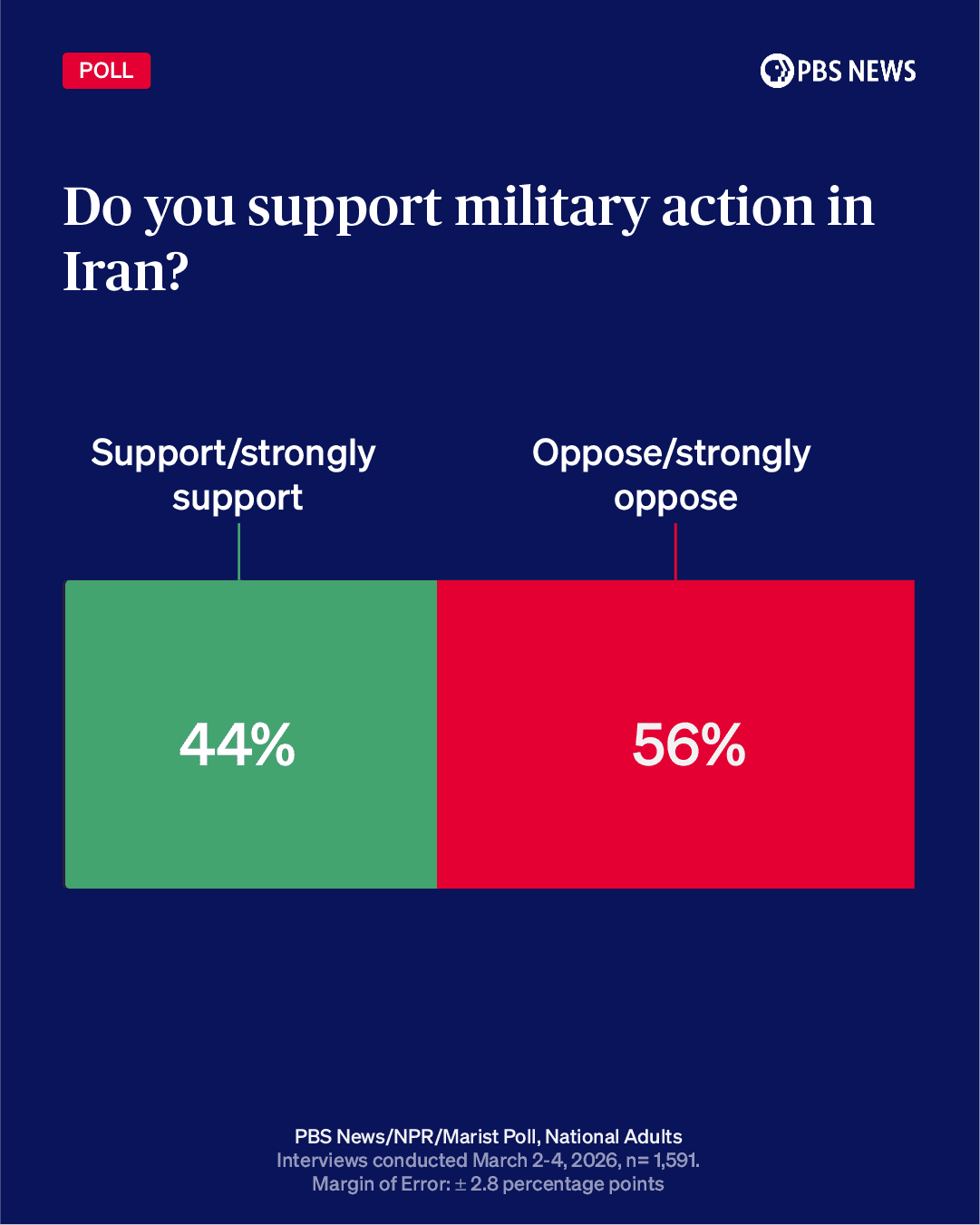
According to a recent poll by PBS, a majority of American citizens oppose the ongoing conflict with Iran.
Additionally, we know that the President has, since his inauguration, been keen on keeping the US equities markets on a winning trajectory.
Together, these dynamic on their own create a political glass ceiling for oil prices. With the U.S. midterm elections less than eight months away, the administration is trapped between a defiant Iran and an electorate that has lost its appetite for a "trillion-dollar military extravaganza."
So with President Trump facing the risk of a hostile House of Representatives, a sustained energy crisis begins to feel less likely than ‘panicans’ point out to.
The Midterm Mandate and the "Exit Ramp" Factor
History shows that the "War Premium" in oil is often a temporary spike, not a permanent structural shift. As indicated by recent reports, the administration is already signaling that the military campaign is "largely complete"—which some are calling a strategic pivot designed to de-escalate and soothe a rattled public (and market).
When the market realizes the U.S. is looking for an exit strategy, the $20–$30 geopolitical risk premium currently baked into Brent is likely to evaporate. The Republican party, facing internal friction and a Democratic surge, is incentivized to prioritize "cheap gas" over "regime change."
Deploying the SPR Bazooka
To force this normalization, the U.S. has reached for the Strategic Petroleum Reserve (SPR).
Talk of a massive, coordinated release is already cooling the S&P 500. By flooding the market with domestic reserves, the administration is effectively shorting its own scarcity.
Similarly, in a move that few saw coming, there are even clear indications of easing oil sanctions against Russia to offset Iranian supply disruptions. This would represent a total 180-degree turn in foreign policy, driven entirely by the need to put a lid on the "can of worms" opened by the Iran conflict.
The Impact: From $100 to $90 in a Heartbeat
We’ve already seen the "imminent impact" of this rhetoric. After Brent peaked over $100/barrel, the mere suggestion of a pull-out and an SPR release collapsed prices back toward $90 in a single trading session.
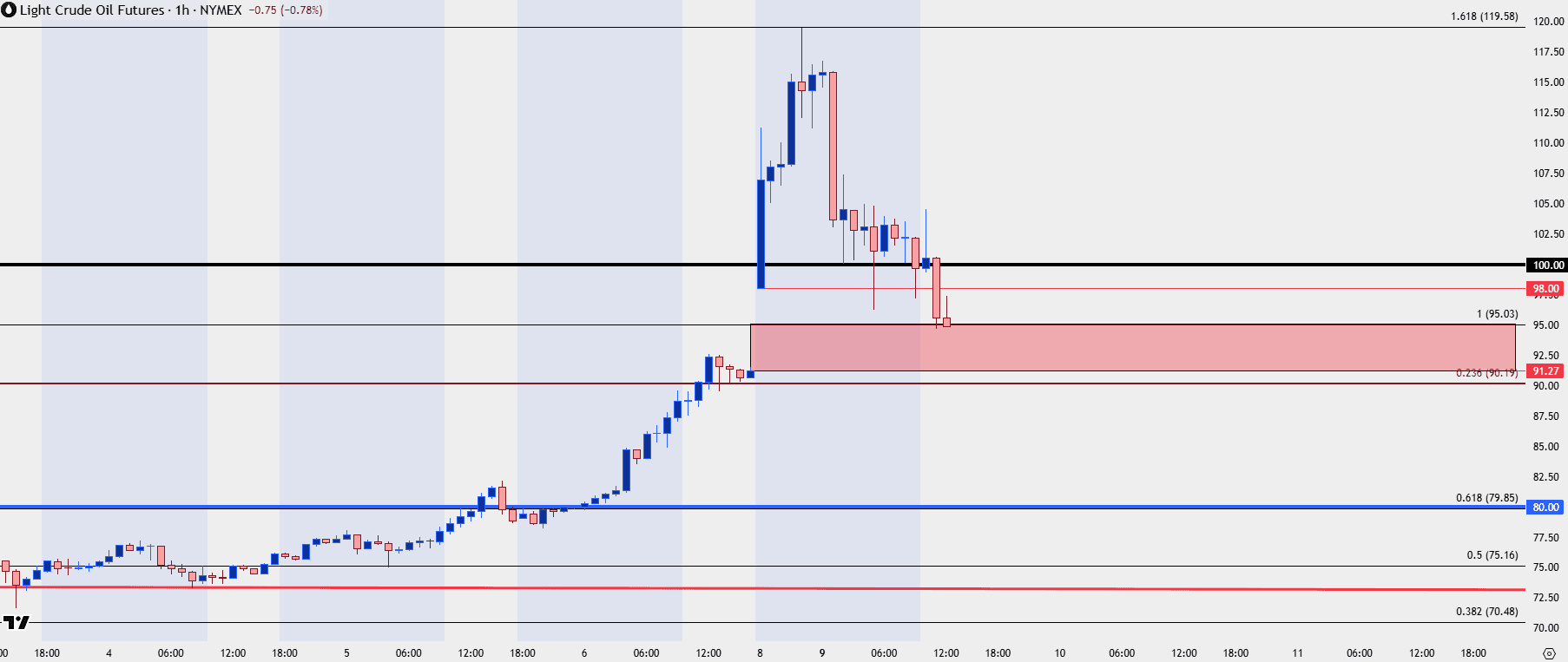
For the contrarian, this volatility is a signal. The "Normalization" thesis posits that the "Floor" is defended by OPEC+, but the "Ceiling" is now firmly set by Washington’s survival instincts. Betting on $120 oil in an election year is betting against the most powerful political machine in the world—a bet that rarely pays off.
Why the Mean Reversion is Inevitable
In the heat of a geopolitical spike, it is easy to mistake a vertical price chart for a permanent shift in reality. But looking at things more closely suggests that normalization may be one of the most logical endgames here. The global economy in 2026 is a finely tuned machine that lacks the tolerance for $100+ oil. When the stakes are this high, the "invisible hand" of the market gets a heavy assist from the visible hand of political survival.
With midterm elections less than eight months away and public support for the Iranian campaign collapsing to 25%, the government is strongly incentivized to find an exit, even if the rhetoric does not suggest that.
Betting against the world's need for stability is a losing hand. Betting on normalization is simply betting on the house.
The Fragility Hedge: Transitioning from Volatility to Value
If the recent $100 oil spike has proven anything, it is that the global economy remains dangerously tethered to the whims of geopolitical actors and "rattled" administrations. This dependence is the ultimate systemic fragility.
While we play the contrarian game of oil normalization in the short term, the long-term "inevitable" is the decoupling from this chaos entirely. For the sophisticated investor, the real opportunity isn't just betting on the return to the mean—it’s betting on the technological revolution that makes the next oil crisis irrelevant.
Deploy the Future: Surmount’s Automated Envirotech Strategy
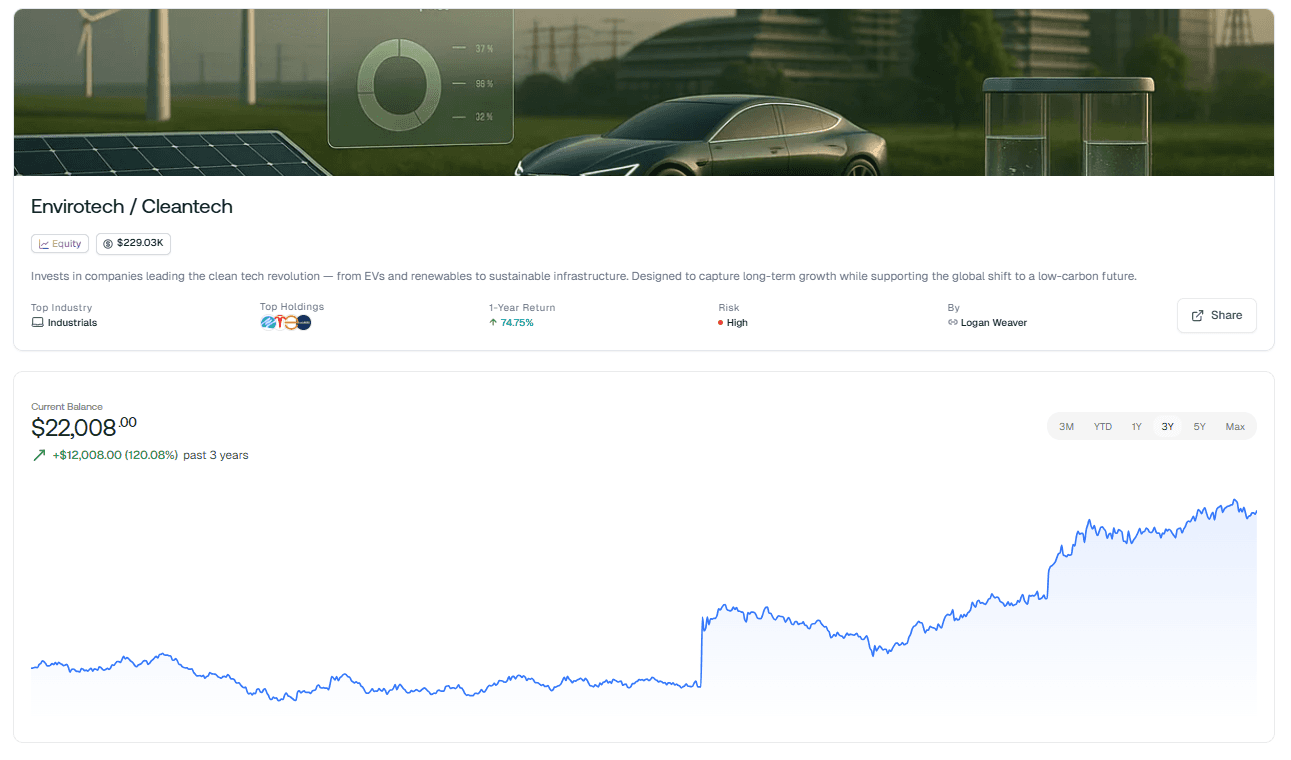
Surmount’s Envirotech/Cleantech Strategy is a precision-engineered algorithmic framework designed to capture the "Code to Concrete" shift in the global energy mix. While traditional markets panic over headlines, this strategy systematically identifies and allocates capital to the architects of the new economy:
Renewable Energy & Energy Storage: The backbone of energy independence.
Electric Vehicles & Sustainable Infrastructure: Capturing the $1.2 trillion industrial rotation.
Water & Waste Management: Investing in the "Real Economy" essentials that remain insulated from geopolitical shocks.
Why Now?
Market fragility creates mispriced entries. As capital flees the "war premium" of old energy, it creates a massive vacuum in forward-looking environmental transformation. This strategy doesn't just offer the potential for high-alpha returns; it offers a seat at the table of the most significant industrial shift since the Steam Age.
Don’t just hedge against the old world—build the new one.
[Click here to view the Envirotech Strategy on Surmount and deploy it to your portfolio today.]
NEVER MISS A THING!
Subscribe and get freshly baked articles. Join the community!
Join the newsletter to receive the latest updates in your inbox.