

Big Pharma’s Booming Capex, and the Opportunity it Brings
In 2011, venture capitalist and tech founder Marc Andreessen wrote his essay "Why Software Is Eating the World," arguing that the most valuable companies of the future would be those that swapped physical constraints for digital ones. For over a decade, the stock market obeyed this prophecy. Multiples expanded for "asset-light" models where scaling a product from one user to one billion cost essentially nothing in incremental infrastructure.
However, the pharmaceutical sector seems to play by a different playbook entirely.
While the rest of the world is obsessing over the "unlimited" margins of digital AI and cloud computing, big pharma is doubling down on a massive, heavy-handed industrial strategy. We are witnessing a pivot back to "Brick and Mortar" on a scale that should make any contrarian investor pause. When a biotech giant commits to $9 billion or $10 billion in annual capital expenditures, they aren't just buying research; they are pouring concrete and installing specialized bioreactors that cannot easily be repurposed.
The market currently rewards these announcements as evidence of unmet demand story. The logic is simple: If they are building more factories, they must have more patients. But this ignores the mechanical reality of the Capex Trap.
In software, once the code is written, the marginal cost of the next customer is near zero. In the high-stakes world of biological manufacturing, the marginal cost remains high and the fixed costs are staggering. By building out massive, drug-specific infrastructure, these firms are essentially "shorting" the idea of future innovation. They are betting that the current delivery mechanism—the current molecule—will remain the gold standard long enough to justify a decade-long depreciation schedule.
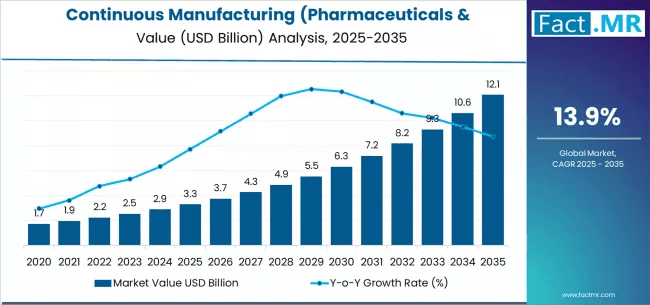
For the contrarian, this raises a provocative question: Is this massive manufacturing expansion a "moat" that protects the business, or is it a "survival tax" paid to keep up with a commoditizing market? In the rush to solve supply chain friction, pharma may be trading its high-multiple "asset-light" future for a low-multiple, industrial-heavy reality.
The Sunk Cost of the "Biological Moat"
The prevailing market narrative suggests that building complex, high-capacity manufacturing plants creates a "barrier to entry" that protects incumbents from generic competition. However, this "Biological Moat" is built on shifting sands. In the pharmaceutical world, physical scale often leads to strategic rigidity, or the inability to pivot when the science, or the market, moves on.
The Specter of Stranded Assets
Investors cheer when a firm announces $10 billion in new "specialized facilities." But specialized is just another word for inflexible. If the industry shifts from complex, refrigerated injectables to shelf-stable, synthetic small-molecule pills, those multi-billion-dollar "moats" become stranded assets.
Unlike a software platform that can be rewritten, a high-end bioreactor cannot be easily repurposed for the next wave of innovation. You aren't just betting on the drug; you are betting that the delivery mechanism won't be disrupted for the next 20 years.
The Negative Operating Leverage Trap
When a company moves from an asset-light R&D model to an asset-heavy manufacturing model, its financial profile changes fundamentally.
Fixed Cost Heavy: High-tech manufacturing comes with massive depreciation, maintenance, and specialized labor costs that don't disappear if sales slow down.
The Margin Crunch: As competition intensifies and "self-pay" models force prices downward, the Return on Invested Capital (ROIC) begins to collapse.
In a price war, the player with the massive, expensive factory is often at a disadvantage compared to a nimble competitor who outsources production to a third-party CDMO (Contract Development and Manufacturing Organization).
Innovation Decay vs. Capital Intensity
The "Biological Moat" assumes that the product life cycle is longer than the capital recovery period. But in an era of rapid AI-driven drug discovery, innovation decay is accelerating. We are seeing a "Consumerization of Pharma" where the gap between a breakthrough drug and its "better, cheaper" successor is shrinking. When the cost to build the "moat" exceeds the duration of the "monopoly," the investor is left holding the bag for a very expensive, very empty fortress.
This section is where you bring the hammer down for your contrarian readers. You want to shift their perspective from seeing "factory expansion" as a bullish signal to seeing it as a classic hallmark of a cycle that has reached its zenith.
Capex as a Signal of Peak Cycle
In the lifecycle of any "mania" asset—whether it’s Permian shale, 3nm chips, or weight-loss peptides—there is a specific moment where the narrative shifts from intellectual scarcity to industrial scale. This is the danger zone. When the primary headline for a pharmaceutical giant moves from "Breakthrough Clinical Data" to "New $5 Billion Production Facility," the alpha may have already left the building.
The "Capacity Overhang" Trap
History is littered with industries that mistook a temporary demand spike for a permanent structural shift. By the time a multi-billion dollar facility is commissioned, permitted, built, and validated (a multi-year process), the market dynamics have often shifted.
Supply Catch-up: You aren't just building capacity; your five largest competitors are doing the exact same thing.
The Result: You arrive at the party just as the supply-demand curve inverts, leading to a "Capacity Overhang" that crushes pricing power.
CAPEX as a Proxy for "Peak Euphoria"
For the contrarian investor, massive capital expenditure is often a lagging indicator of past success rather than a leading indicator of future returns.
The Signal: Companies typically only greenlight "lofty capex" when their balance sheets are flushed with "peak cycle" cash.
The Reality: This capital is being deployed at the highest point of construction costs and the lowest point of future drug pricing.
From Innovation to Commodity
This shift marks the transition of a drug class from a high-margin IP play to a low-margin commodity business. When a company is forced to spend nearly its entire Free Cash Flow just to keep its supply chain competitive, it is no longer a "Growth" stock; it is a "Utility" with a much higher risk profile.
When management starts talking about "manufacturing footprints" more than "molecular breakthroughs," they are admitting that the era of easy, high-margin growth is over. The "Great Capex Trap" is set when investors mistake the noise of construction for the signal of growth.
Beyond the Capex Trap: Where the Real Alpha Lives
If the "The Great Capex Trap" tells us anything, it’s that the giants of yesterday can easily become the bag-holders of tomorrow’s commodity markets. When the "miracle" becomes a mass-market commodity, the outsized returns vanish. To find the next leg of exponential growth, you have to look where the physical moats haven’t yet become millstones—in the raw, high-margin world of true innovation.
The era of the "one-drug wonder" is over. The future belongs to those who own the underlying platforms of Gene Editing, Immunotherapy, and Precision Medicine.
Maximize Your Edge with the "Biotech Breakthroughs" Strategy
Stop chasing the companies building the factories, and start investing in the companies building the future. Our Biotech Breakthroughs automated strategy on Surmount is engineered specifically for the contrarian who recognizes that the best returns aren't found in yesterday's winners, but in a diversified, disciplined approach to the next frontier.

Diversified Dominance: Gain immediate exposure to 29 public companies at the bleeding edge of biotech—carefully selected for their financial resilience and growth potential.
Precision Weighting: We don't just "buy the index." Our strategy uses custom weights based on peer comparison and fundamental strength, ensuring you aren't overexposed to the "Capex Traps" we've discussed.
Algorithmic Discipline: The strategy runs on a daily interval with a 30-day rebalancing cycle. This ensures your portfolio automatically trims the over-hyped and doubles down on the undervalued, removing the emotional friction that destroys retail returns.
The trend of human longevity and medical breakthroughs is a multi-decade tailwind—but only if you aren't stuck in the wrong part of the supply chain.
NEVER MISS A THING!
Subscribe and get freshly baked articles. Join the community!
Join the newsletter to receive the latest updates in your inbox.