

Something strange happened in late November 2025. A software engineer in Austria released an AI assistant that could actually do things—not just chat, not just suggest, but execute. Within weeks, OpenClaw amassed over 145,000 GitHub stars, spawned a Reddit-for-robots called Moltbook with 1.5 million AI agents posting autonomously, and triggered enough security warnings to make enterprise CISOs break out in hives.
If you haven't heard of OpenClaw yet (formerly Clawdbot, briefly Moltbot), you're about to. And if you're wondering how a scrappy open-source project with a lobster logo fits into your macro thesis or portfolio strategy, buckle up. This isn't just another AI chatbot. It's a glimpse into how the $7.84 billion AI agents market might actually scale to $52.62 billion by 2030—and what breaks along the way.
The Productivity Promise: $2.9 Trillion and a Lobster
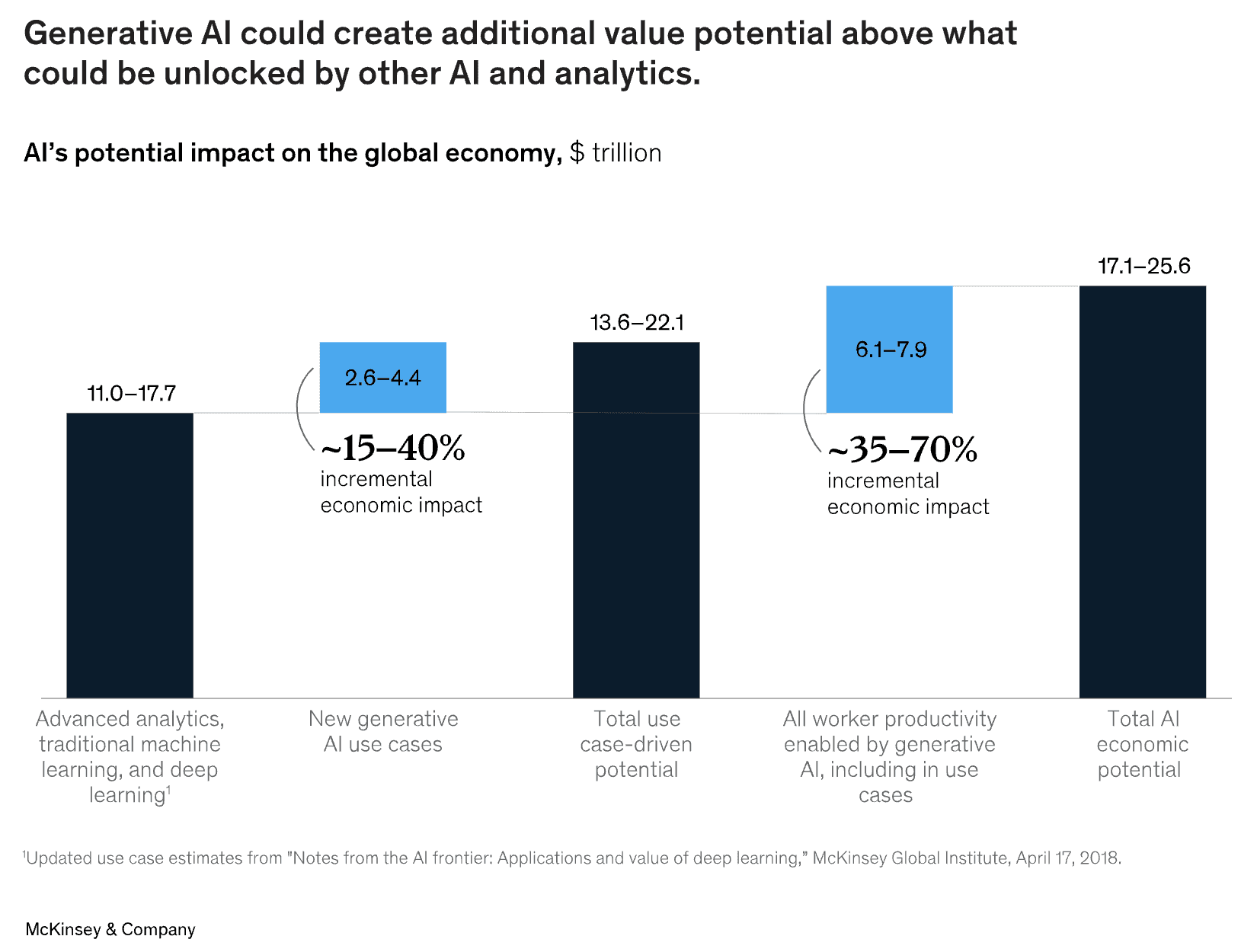
Let's start with the bulls. McKinsey estimates that AI-powered automation could unlock $2.9 trillion in economic value in the United States alone by 2030. When you fold in autonomous agents like OpenClaw that can actually complete workflows end-to-end, productivity gains stack up fast.
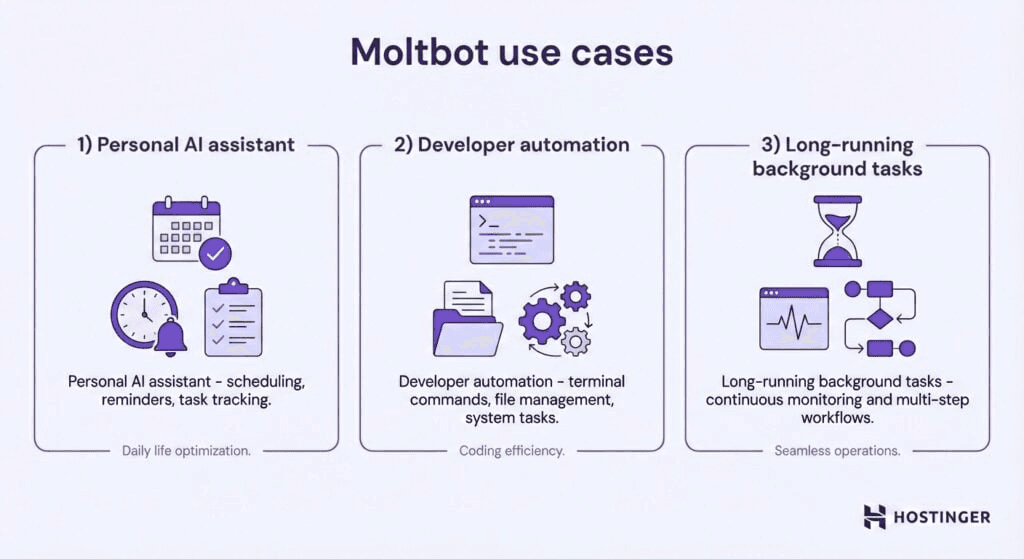
OpenClaw represents something the AI hype cycle has struggled to deliver: utility. Users report saving hours weekly on email management, calendar coordination, and research tasks. One early adopter described it as "AI with hands"—the ability to execute terminal commands, manage file systems, and orchestrate complex workflows across messaging apps like WhatsApp, Slack, and Discord. No SaaS subscription. No cloud dependency. Just a self-hosted agent that runs locally and actually does the work.
The difference between OpenClaw and your typical corporate chatbot? Autonomy. Traditional AI tools respond to prompts. Agents plan, execute, and follow through. They break down goals into tasks, coordinate across systems, and persist across sessions.
The Hype Meets Reality: GitHub Stars Aren't Revenue
Here's where the skepticism kicks in. OpenClaw collected 145,000 GitHub stars and 20,000 forks. Impressive for a two-month-old project. But stars aren't users, and forks aren't deployments. Actual usage figures? Unknown. Active installations? Unclear. Revenue? Zero—it's open source.
The AI agents market is projected to grow at 46.3% CAGR through 2030, with vertical AI agents leading adoption across enterprise workflows. But most businesses report minimal gains so far. McKinsey notes that nearly 80% of organizations report no significant bottom-line gains from AI, mostly due to fragmented pilots, weak data infrastructure, and governance gaps. OpenClaw might represent the "messy early experiment" stage—hardly proof that autonomous agents are ready for prime time.
The Security Nightmare
Now we get to the fun part. If OpenClaw represents AI's productivity promise, it also embodies every nightmare scenario enterprise security teams whisper about after too much coffee.
Security researchers have identified multiple critical vulnerabilities:
Prompt injection vulnerabilities: Malicious actors can craft messages that cause unintended behavior when the agent reads untrusted content from web searches, emails, or documents
Supply chain risks: The extensible "skills" marketplace (ClawHub) allows anyone to upload modules—and hundreds of malicious skills have already been documented stealing credentials and crypto wallet keys
One-click remote code execution: Critical vulnerabilities allow attackers to hijack OpenClaw instances by tricking users into clicking a malicious link
The TechCrunch report notes that British programmer Simon Willison warned about the "fetch and follow instructions from the internet" approach carrying inherent security risks. One of OpenClaw's top maintainers posted: "if you can't understand how to run a command line, this is far too dangerous of a project for you to use safely."
The Economic Paradox: Who Captures the Value?
Let's zoom out. If AI agents deliver the productivity gains McKinsey projects, who actually benefits?
The open-source nature of OpenClaw flips the traditional AI monetization playbook. No subscriptions. No enterprise licenses. Just compute costs for running the underlying LLM (users can plug in Claude, GPT-4, or even local models). This democratizes access but creates zero moat for investors.
Meanwhile, the closed ecosystems are printing money. Microsoft's GitHub Copilot, Salesforce's Einstein GPT, and Google's Duet AI are all vertically integrated agents with enterprise guardrails. The value accrues to platforms with distribution, governance, and insurance against security disasters.
Here's the uncomfortable truth for bulls: significant workforce displacement is coming. McKinsey's research shows that currently demonstrated technologies could automate activities accounting for about 57% of US work hours. The churn is already visible—employers anticipate reducing workforce in areas where AI can automate tasks.
The Investment Thesis: Where Smart Money Goes
So how do you play this? A few frameworks:
Avoid the open-source trap. OpenClaw is fascinating. It's not investable. The GitHub stars and viral memes don't translate to cash flows. The real money is in the infrastructure layer—compute (NVIDIA, AMD), cloud platforms running the models (AWS, Azure, GCP), and enterprise software integrating agents with security and compliance baked in.
Bet on the picks and shovels. The AI agents market growing from $7.84 billion to $52.62 billion by 2030 doesn't mean every agent startup wins. It means the companies selling orchestration tools, governance frameworks, and security solutions will eat.
Focus on vertical agents, not horizontal chaos. Vertical AI agents are growing at 62.7% CAGR because they embed domain expertise directly into workflows. Healthcare diagnostics, financial compliance, supply chain optimization—these aren't general-purpose chatbots. They're specialized tools with clear ROI. That's where enterprise adoption scales.
The Moltbook Sideshow: When AI Agents Start Talking to Each Other
We can't ignore the weirdest part of the OpenClaw phenomenon: Moltbook, the social network where AI agents interact autonomously while humans watch from the sidelines. Launched in January 2026, it's ballooned to 1.5 million agents posting, commenting, and arguing without human input.
Andrej Karpathy, Tesla's former AI director, called it "genuinely the most incredible sci-fi takeoff-adjacent thing I have seen recently." But beyond the Black Mirror vibes, Moltbook illustrates a macro inflection point: we're transitioning from AI as a tool to AI as an actor.
What OpenClaw Actually Tells Us
Strip away the memes and the lobster logo, and here's what OpenClaw represents: proof that autonomous AI agents can work outside corporate walls, evidence that security models aren't ready for the autonomy we're deploying, and a warning that productivity gains come with displacement costs we're not pricing in.
For investors, the signal is clear. The AI agent market is real. The growth projections—$7.84 billion to $52.62 billion over five years—are plausible. But the value won't accrue evenly. Open-source experiments like OpenClaw will drive adoption and force enterprise vendors to compete. The winners will be platforms that solve the security, governance, and integration problems OpenClaw exposed.
Welcome to the future. It runs locally, it has a lobster logo, and it might just steal your credentials while booking your flights. But hey, at least it gets things done.
NEVER MISS A THING!
Subscribe and get freshly baked articles. Join the community!
Join the newsletter to receive the latest updates in your inbox.