
Time Arbitrage Investing: An Overlooked Edge to Exploit
At its core, contrarian investing has always rested on the information pillar. You win by finding the obscure filing, the missed data point, or the localized trend before the rest of the street caught on. But increasingly, with the advent of AI investing tools and automated apps, this game is becoming increasingly complex to win.
Between high-frequency algorithms, AI-driven sentiment analysis, and the democratization of data, the information edge has seemingly been squeezed to zero. Everyone sees the same charts; everyone reads the same earnings transcripts.
If you are trying to out-calculate a machine or out-read a thousand analysts, you aren't a contrarian—you’re a gambler.
The real opportunity today doesn't lie in what you know, but in how long you can afford to wait. While the market has become hyper-efficient in processing data, it has become hyper-inefficient in managing patience. We are living through a massive "Behavioral Gap." Because institutional capital is managed by people who are terrified of a single bad quarter, the market’s "memory" is shrinking.
This is the birth of Time Arbitrage Investing. Time Arbitrage is the practice of exploiting the difference between an asset’s long-term intrinsic value and its short-term "noise" price. This opportunity is so favorable now, especially as the "herd" is currently pricing in temporary anxieties—an escalation of the Iran war, AI CapEx concerns, fluctuating discount rates, and geopolitical jitters—as if they are permanent structural shifts.
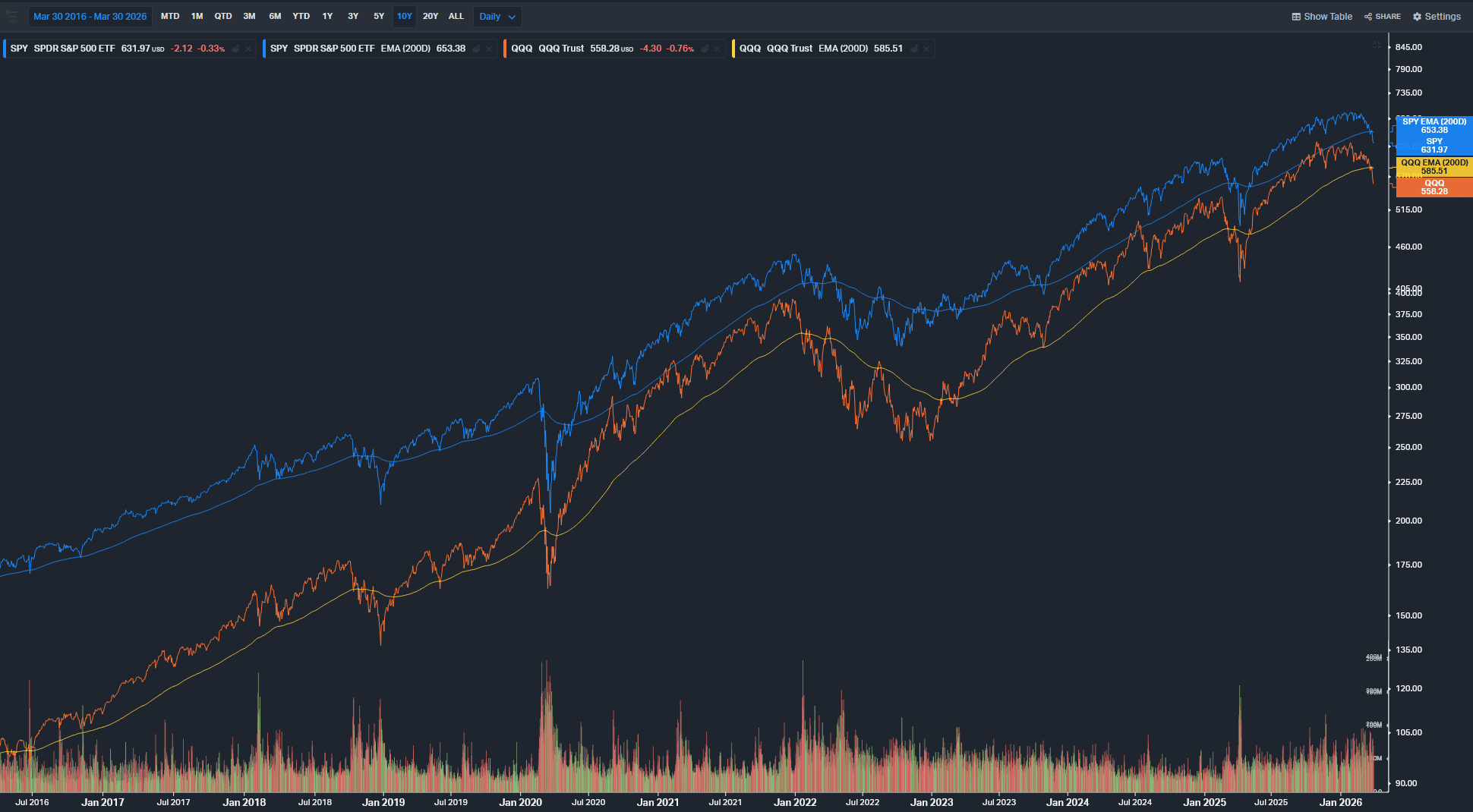
When you see the S&P 500 and the Nasdaq dipping below their 200-day exponential moving averages despite rising earnings per share (EPS), you are witnessing a massive liquidation of patience. The market is offering a "liquidity discount" to anyone willing to look past the next ninety days. To be a true contrarian in this environment, you don't need a Bloomberg Terminal; you need a calendar that measures in years while everyone else is looking at a stopwatch.
The Institutional Trap: Why "Smart Money" is Forced to be Short-Sighted
The term "Smart Money" is one of the great misnomers of modern finance. While institutional fund managers are often brilliant, they operate within a professional cage that mandates short-termism. To earn alpha through time arbitrage investing, you must first understand the three structural traps that force these giants to sell exactly when they should be buying.
1. Career Risk vs. Investment Risk
For a professional fund manager, the risk of losing their job is often greater than the risk of losing their clients' money. If a manager holds a stock like Microsoft through a 20% drawdown because they believe in the 10-year AI roadmap, but their peers sold and moved into "safe" staples, that manager looks incompetent for three months.
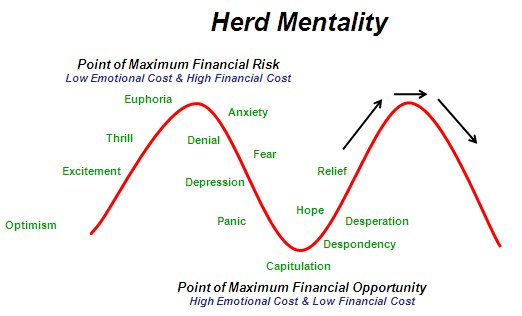
In Wall Street’s eyes, it is better to fail conventionally (by following the herd) than to succeed unconventionally. This creates a "herd mentality" where institutions dump high-quality companies at the first sign of a narrative shift to avoid being the "last one holding the bag" during a quarterly review.
2. The "Benchmark Curse" and Redemption Risk
Most large funds are judged against a benchmark—usually the S&P 500—on a monthly or quarterly basis. If they underperform for two quarters in a row, they face redemptions. Clients pull their money.
When clients pull money, the fund manager is forced to sell their holdings to raise cash, regardless of whether the stock is undervalued. This creates a vicious cycle:
Short-term fear leads to price drops.
Price drops lead to client withdrawals.
Withdrawals force "Smart Money" to sell great companies at the bottom. You, the individual investor, are the beneficiary of this forced liquidation.
3. The Liquidity Tax
The sheer size of institutional "whales" is a disability in a fast-moving market. A multi-billion dollar fund cannot simply "buy the dip" in an afternoon without moving the price against themselves. Conversely, when they decide to exit a position due to a change in "momentum" or "sentiment," it can take weeks of selling to offload the position.
This creates the "momentum trends" we see in the charts. When you see the Nasdaq or S&P 500 dip below the 200-day exponential moving average (EMA), you aren't really seeing a change in the fundamental value of American business. This is more of a "liquidity tax" being paid by massive funds as they clumsily exit the room at the same time.
Contrarian Take: The volatility that terrifies the average investor is actually the "Smart Money" being forced to provide you with a discount. They are playing a game of 90 days; you are playing a game of decades. Their constraints are your opportunity.
Practical Application for Time Arbitrage Investing
The most glaring "gap" in today’s market is the divergence between price action and corporate profitability. As we noted, while the headlines scream about "AI fatigue" and "stretched valuations," the data tells a different story.
We are seeing a rare phenomenon where Earnings Per Share (EPS) for the tech giants is rising, while their Price-to-Earnings (P/E) multiples are compressing.
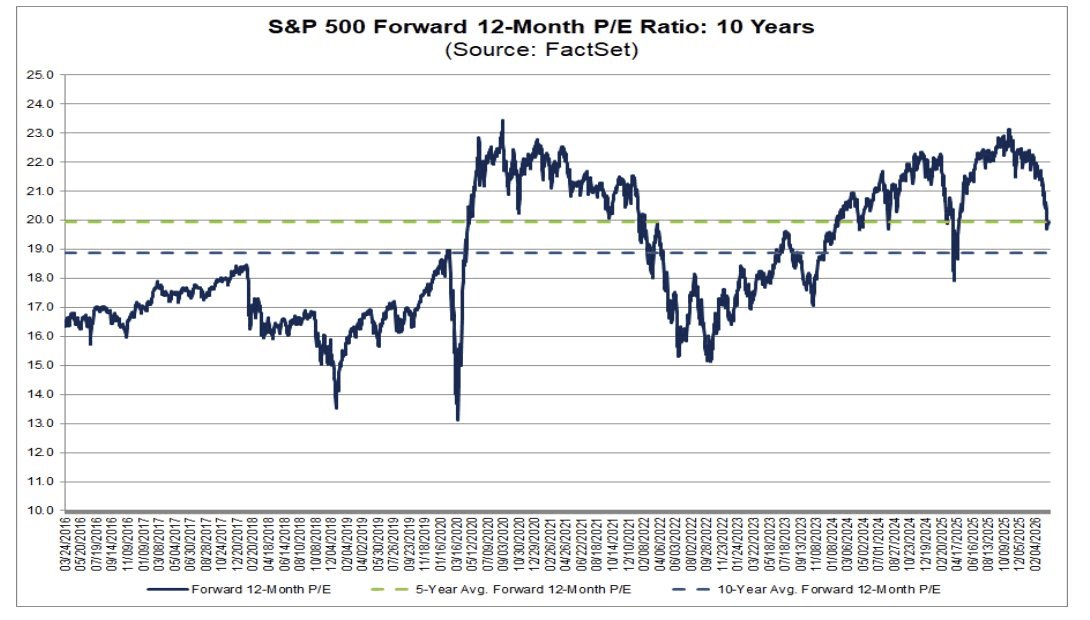
The market seems to be pricing these companies as if their best days are behind them, yet their balance sheets suggest they are just entering a new phase of hyper-efficiency. When you buy a company like Nvidia at these compressed multiples, you are essentially getting a "discount" on their future cash flows because the market is too impatient to wait for the CapEx (capital expenditure) to turn into bottom-line profit.
Using the 200-Day EMA as a Sentiment Filter
For the contrarian, technical indicators are not for predicting the future, but for measuring current hysteria.
As shown in recent charts, the S&P 500 and Nasdaq rarely trade below their 200-day Exponential Moving Average (EMA) for long.
When the price dips below this line, "momentum" traders exit because their models tell them the trend is broken. This creates a liquidity vacuum. The time arbitrageur fills this vacuum, buying quality assets at a "technical discount" from sellers who are forced to exit due to short-term risk management rules.
The "Capex Fear" Fallacy
Currently, the market is punishing "Hyperscalers" (Microsoft, Google, Meta) for their massive investments in AI infrastructure. The "short-term" view is that this spending hurts Free Cash Flow (FCF) today.
The longer term reality is that these companies are building the "digital railroads" of the next century. By the time this CapEx results in undeniable revenue growth, the stock prices will likely be 30-50% higher.
Exploiting the gap means being comfortable with "underperformance" for a few quarters while the infrastructure is built. You are buying the uncertainty today to harvest the certainty of tomorrow.
Summary: The Price of Admission
The "gap" in today’s market is a Volatility Gap. High-quality compounders are being sold off not because they are failing, but because they are "volatile."
If you are willing to endure a 20% drawdown over the next six months to capture a 100% gain over the next five years, you have successfully institutionalized Time Arbitrage. You aren't just an investor; you are a provider of stability to a market that is currently addicted to the "Now."
The Next Step: Automating Your Edge
If you’ve read this far, you understand that Time Arbitrage is the ultimate superpower for the contrarian investor. But let’s be honest: while the logic of holding through volatility is simple, the psychology is brutal. Most investors fail because they let emotion override their strategy during the very moments they should be exploiting the market’s short-sightedness.
This is why I’m a firm believer in removing the "human element" from the execution phase.
Maximize the Cycle with the GLD-Tech Rotation Strategy
To truly capitalize on the market conditions I’ve described—where tech is undervalued but volatility remains high—I am highlighting a sophisticated algorithmic approach available on Surmount: the GLD-Tech Rotation.
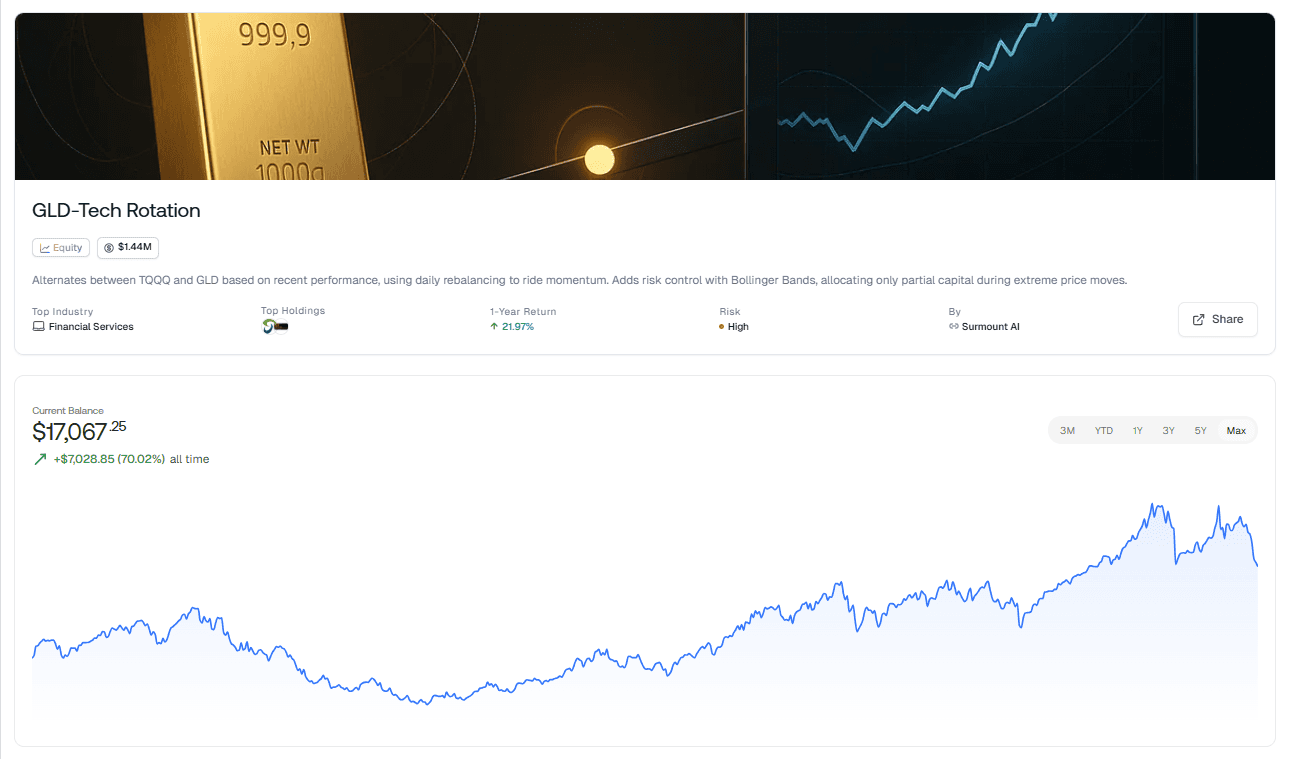
While most investors are paralyzed by the choice between "fleeing to safety" (Gold) or "betting on the future" (Tech), this strategy uses mathematical rigor to do both. It is designed to exploit the exact time arbitrage and momentum shifts we’ve discussed:
Adaptive Momentum: The strategy daily rebalances between TQQQ (3x Nasdaq exposure) and GLD (Gold), automatically flowing into the relative outperformer. It rides the tech compounders when they run and ducks into gold when the market panics.
The Volatility Shield: It doesn't just blindly follow trends. It utilizes Bollinger Bands to measure standard deviation. If the price moves too far, too fast (more than 1.5 SD from the 20-day SMA), the strategy automatically de-risks, deploying only 50% of capital to protect you from "tail risk" or market crashes.
Precision Execution: It turns the "Time Arbitrage" theory into a daily reality, capturing micro-rotations that are impossible for a manual trader to track.
Don't Just Watch the Cycle—Own It
Contrarian investing isn't just about having the right ideas; it’s about having the discipline to execute them when others won't. By using the GLD-Tech Rotation strategy, you aren't just betting on a recovery—you are utilizing an automated system designed to navigate the noise, capture the momentum, and protect your downside.
[Deploy the GLD-Tech Rotation Strategy to your portfolio]
NEVER MISS A THING!
Subscribe and get freshly baked articles. Join the community!
Join the newsletter to receive the latest updates in your inbox.